
Adverse media screening: Why it matters and what it catches


Adverse media screening involves reviewing trusted public sources to identify information that could signal potential risks linked to a prospective employee. This might include reports of financial misconduct, regulatory breaches, fraud, workplace misconduct or other issues that could create reputational, compliance or security concerns for an employer.
A criminal record check tells you what someone has been convicted of. It says nothing about the fraud investigation they're currently under, the regulatory action against the firm they just left, or the misconduct that put them in the news. For most junior roles that gap doesn't matter much. For a senior, regulated or public-facing hire, it's the whole risk. Adverse media screening is how you close it.
Why an adverse media check matters
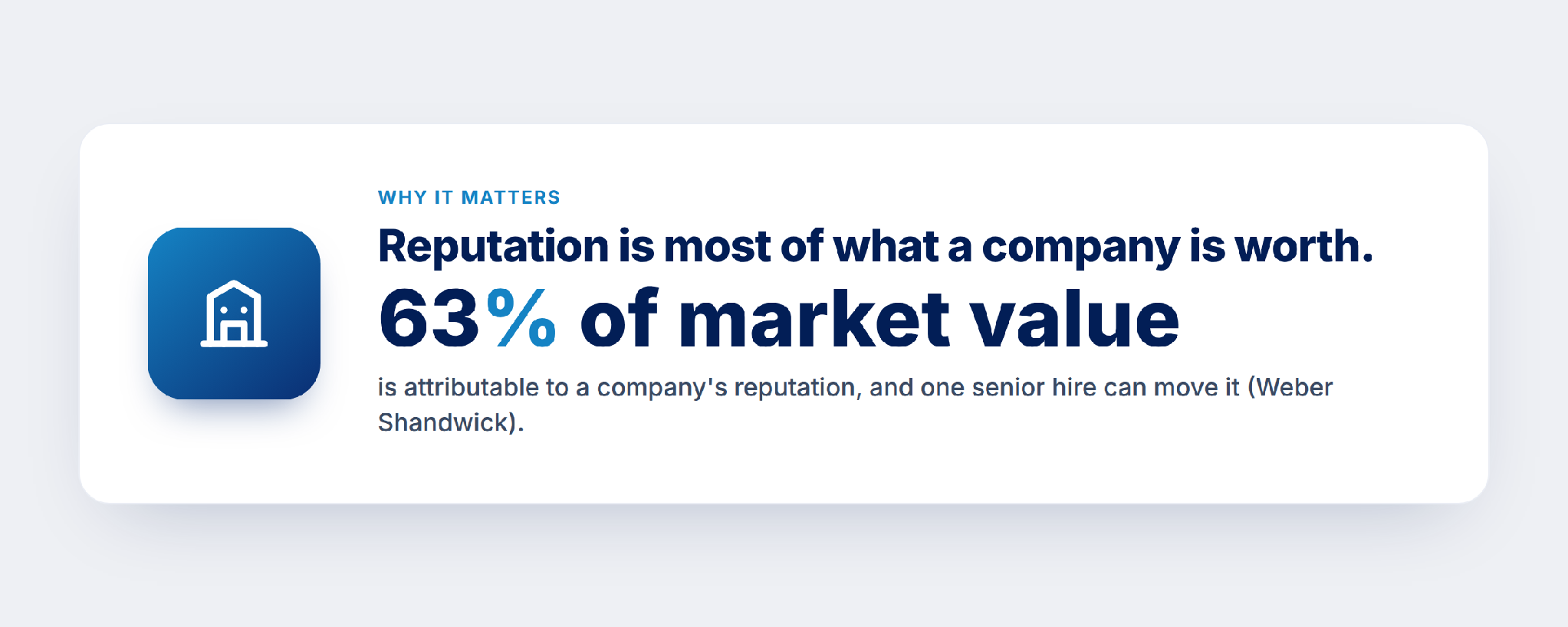
Reputation is now most of what a company is worth. Weber Shandwick puts 63% of market value down to a company’s reputation, and a large share of that rides on its leaders. One senior hire with a public record can move it in a single news cycle.
Two things have made this a standard check rather than a nice-to-have. Regulated sectors already require it: adverse media screening is part of anti-money-laundering and enhanced due diligence, and regulators expect it for people in positions of trust. And the risk has gone public. In Veremark’s 2025 data, adverse media screening is concentrated in senior and higher-risk hiring, and technology firms run it more than any other sector.
The risks of skipping adverse media screening
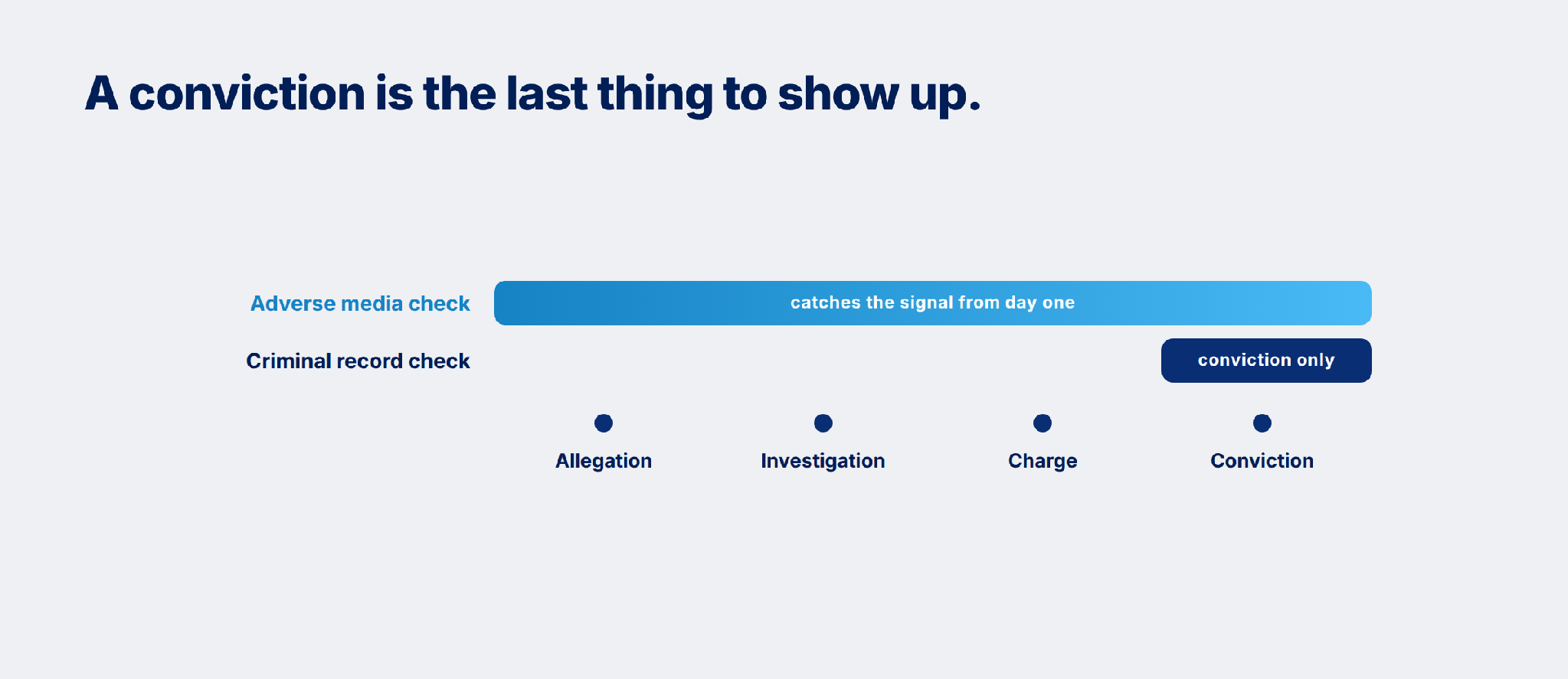
Your other checks are backward-looking. A criminal record shows convictions, an employment check confirms dates and titles, a reference tells you what a former manager is willing to say. None of them surface an allegation, an open investigation, a civil case or a regulatory sanction, and those appear years before anything reaches a court, if it ever does.
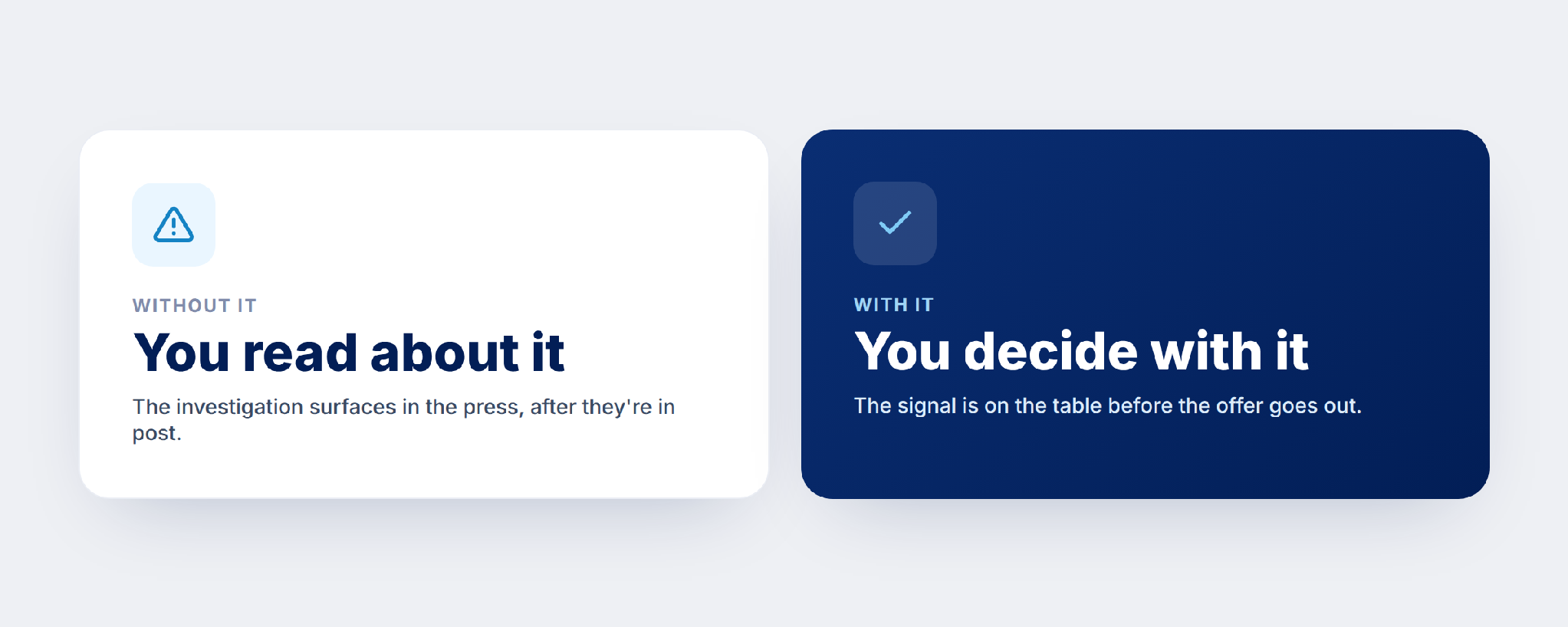
That's the exposure. The candidate whose past surfaces after they're in a trust position becomes a client problem, a board problem and a press problem, not an HR one. And it scales with seniority: the more public the role, the more a missed signal costs when it lands.
The benefits of running an adverse media check
Run adverse media screening alongside your criminal and financial checks and you cover conduct that's proven, alleged and reported, the full picture rather than a third of it. You decide with the facts in front of you, before an offer, instead of managing a headline after one.
It also does real compliance work. For regulated roles it evidences your AML and fit-and-proper obligations with an auditable screen. And because risk doesn't stop on someone's start date, ongoing monitoring catches what emerges once they're in post.
Industries and roles that need an adverse media check
It earns its place for senior, regulated and public-facing hires. Run it for:
- Financial services & fintech: FCA fit-and-proper appointments and senior certified staff
- Professional & legal services: Partners, advisers and client-facing senior hires
- Healthcare & education: Positions of trust and public responsibility
- Public sector & non-profits: Officials, trustees and public-facing appointments
- Media, PR & consumer brands: Spokespeople and reputation-sensitive roles
- Executive & board level, any sector: C-suite, non-executive directors and public figures
Why choose Veremark for adverse media screening
Screening the world's media for one name is easy to do badly: too many false matches, no context, a report no one can act on. Veremark is built to avoid that.
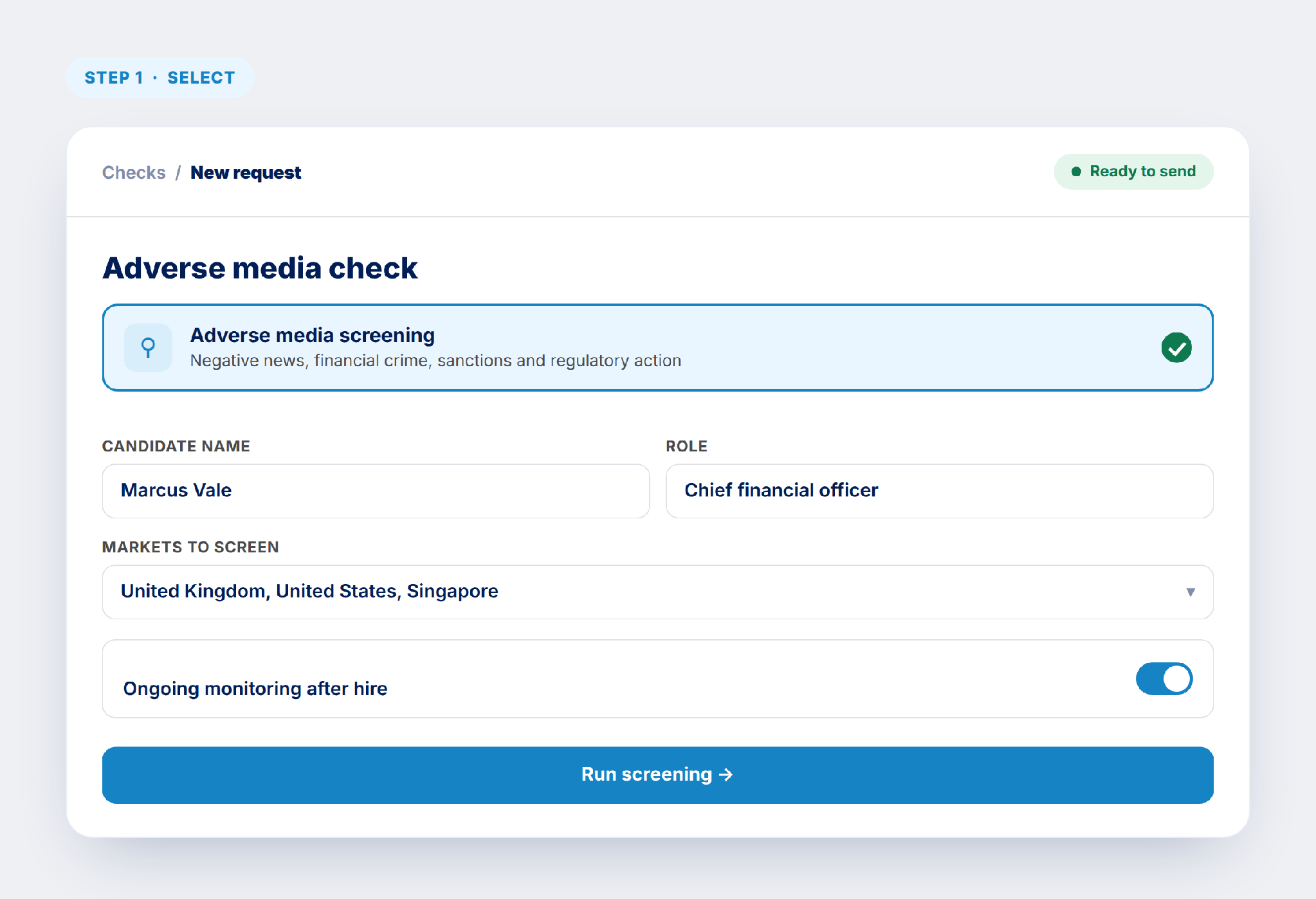
You choose the markets and run the screen from the same platform as the rest of your checks.
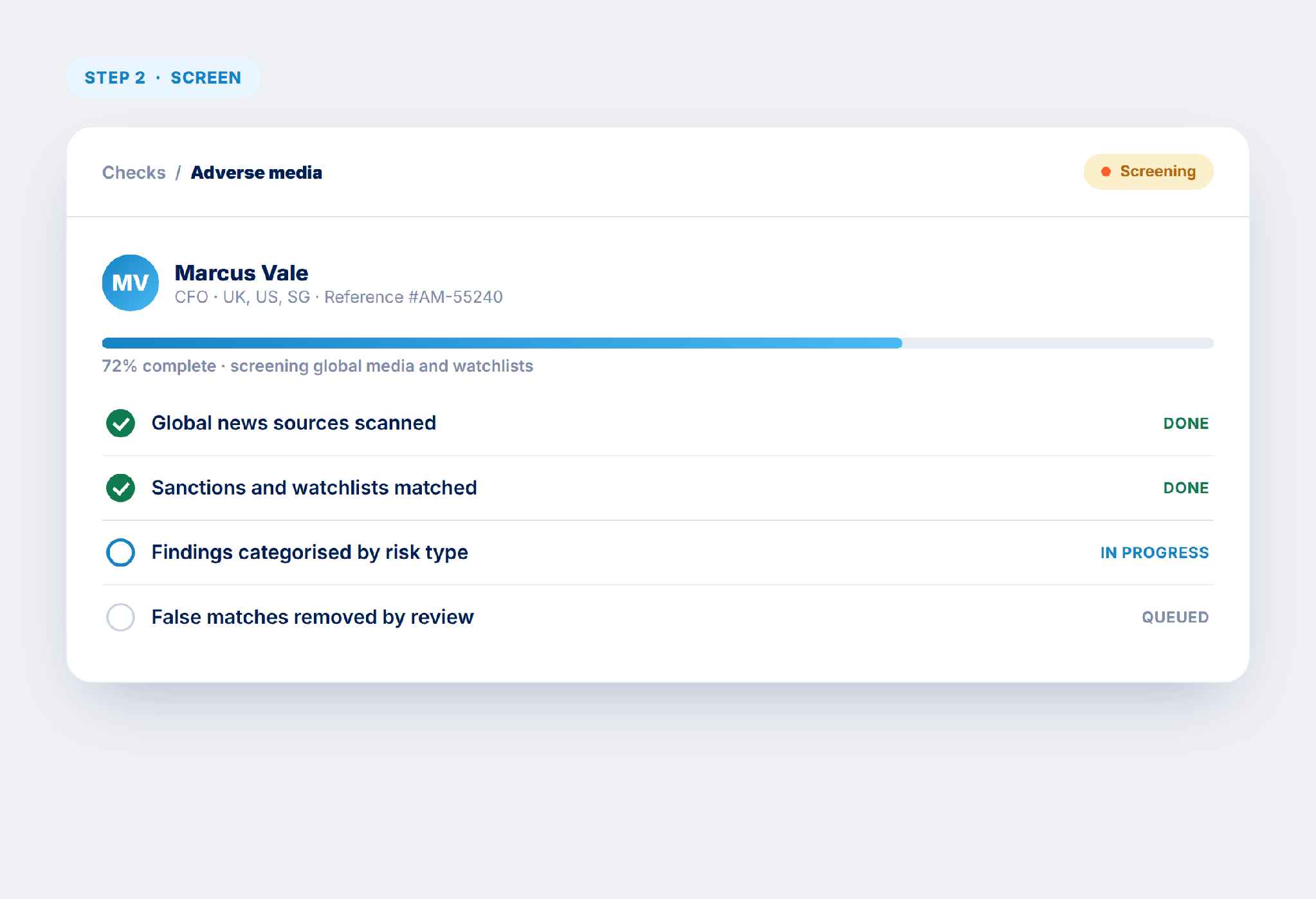
It scans global online and offline coverage and the main watchlists, categorises what it finds by risk type, and strips out false matches.
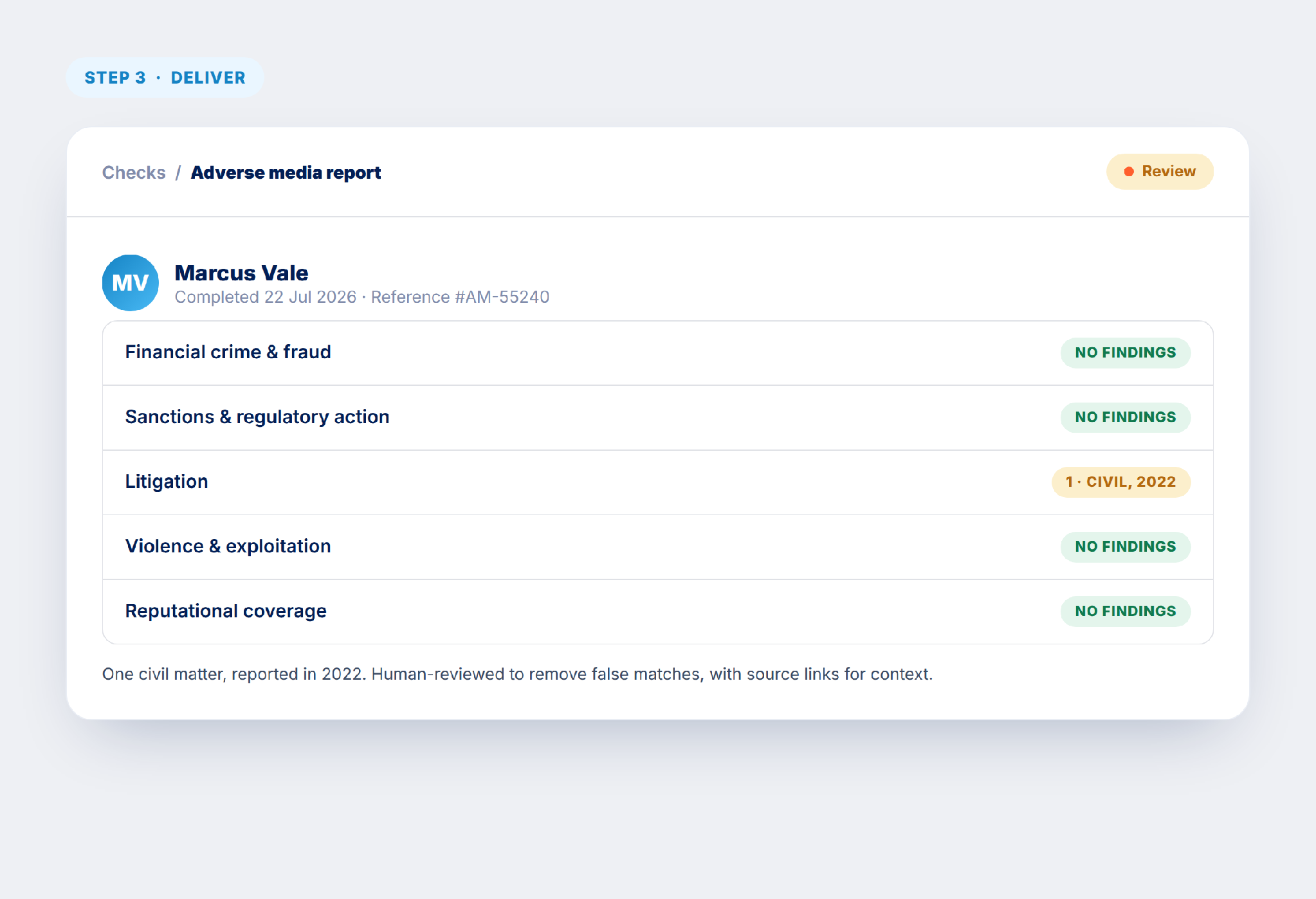
You get a structured, shareable report with the findings, the context and the source links, so a hiring or compliance team can make a call.
It's GDPR and PDPA compliant, pay-as-you-go with no lock-in, backed by 24/7 support, and fast enough that it doesn't hold up the offer.
Adverse media checks: the bottom line
Adverse media screening finds the risk a CV, a criminal record and a reference will never show you. For senior, regulated and public-facing roles, that's the difference between deciding with the facts and reading about them later. Veremark runs it globally, compliantly, and as part of the same platform as every other check you make.

Read More






FAQs

This depends on the industry and type of role you are recruiting for. To determine whether you need reference checks, identity checks, bankruptcy checks, civil background checks, credit checks for employment or any of the other background checks we offer, chat to our team of dedicated account managers.
Many industries have compliance-related employment check requirements. And even if your industry doesn’t, remember that your staff have access to assets and data that must be protected. When you employ a new staff member you need to be certain that they have the best interests of your business at heart. Carrying out comprehensive background checking helps mitigate risk and ensures a safer hiring decision.
Again, this depends on the type of checks you need. Simple identity checks can be carried out in as little as a few hours but a worldwide criminal background check for instance might take several weeks. A simple pre-employment check package takes around a week. Our account managers are specialists and can provide detailed information into which checks you need and how long they will take.
All Veremark checks are carried out online and digitally. This eliminates the need to collect, store and manage paper documents and information making the process faster, more efficient and ensures complete safety of candidate data and documents.
In a competitive marketplace, making the right hiring decisions is key to the success of your company. Employment background checks enables you to understand more about your candidates before making crucial decisions which can have either beneficial or catastrophic effects on your business.
Background checks not only provide useful insights into a candidate’s work history, skills and education, but they can also offer richer detail into someone’s personality and character traits. This gives you a huge advantage when considering who to hire. Background checking also ensures that candidates are legally allowed to carry out certain roles, failed criminal and credit checks could prevent them from working with vulnerable people or in a financial function.
Trusted by the world's best workplaces




APPROVED BY INDUSTRY EXPERTS
.png)
.png)


and Loved by reviewers


Transform your hiring process
Request a discovery session with one of our background screening experts today.