8 essential features every workplace whistleblowing channel should have


When an employee witnesses misconduct, how confident are you that they'll report it? And if they do, can you be certain that your organisation has the right processes in place to protect them and respond appropriately?
These are important questions for any HR or compliance leader, particularly when you're responsible for managing risk across a large organisation.
An effective whistleblowing channel gives employees a safe way to raise concerns about wrongdoing, while providing your organisation with the information and tools needed to investigate those concerns fairly.
However, the technology behind your reporting channel can make a significant difference to how well this works in practice.
If you're reviewing your existing arrangements or considering investing in new whistleblowing software, here are 8 essential features to look for.
What should a workplace whistleblowing channel include?
At a minimum, an effective enterprise whistleblowing channel should offer anonymous reporting, strong data security, two-way communication, structured case management, independent reporting options and clear investigation records.
For larger organisations, it should also support multiple locations, configurable workflows, restricted access to sensitive information and meaningful reporting for leadership teams.
The following 8 features will help you assess whether your current solution meets those expectations.
1. Genuine anonymity for employees reporting misconduct
Anonymity is one of the most important features of any whistleblowing channel.
Employees may be reluctant to raise concerns if they believe doing so could damage their careers, affect workplace relationships or expose them to retaliation.
This is particularly relevant when allegations involve someone in a senior position.
Your reporting channel should therefore allow employees to submit concerns without revealing their names, work email addresses or other identifying information.
But genuine anonymity involves more than removing a name field from an online form.
You also need to consider whether the technology collects identifying metadata, who can access reports and whether information shared during an investigation could inadvertently reveal someone's identity.
Remember that even a technically anonymous channel cannot eliminate every possibility of identification. The circumstances described in a report may themselves reveal who submitted it.
Your priority should be to minimise those risks and give employees confidence that their information will be handled appropriately.
For a closer look at how this technology works, read our guide to anonymous whistleblowing channels, security and legal considerations.

2. Strong encryption and data security
Whistleblowing reports can contain some of the most sensitive information your organisation handles.
An employee might disclose allegations of fraud, harassment, discrimination, corruption or failures to follow workplace regulations.
These reports may also include confidential business documents and personal information about multiple employees.
Consequently, data security should be a major consideration when choosing your whistleblowing software.
Look for a solution that provides:
- Strong encryption to protect reports and communications.
- Secure storage of supporting documents and evidence.
- Appropriate restrictions on who can view sensitive information.
- Clear data retention and deletion controls.
- Security documentation and independent assurance that your IT and compliance teams can assess.
For enterprise organisations operating across different jurisdictions, it's also important to understand where information is processed and stored.
Your whistleblowing technology should support your organisation's privacy and information-security obligations, including applicable data protection legislation.
3. Secure two-way communication with anonymous whistleblowers
Receiving a report is often only the beginning of the process.
Imagine an employee anonymously reports financial misconduct involving a senior colleague. The allegation is potentially significant, but the initial disclosure doesn't contain enough information for your investigators to establish what happened.
How do you request clarification without compromising the employee's anonymity?
This is where two-way messaging becomes particularly valuable.
An effective whistleblowing channel should allow authorised investigators to communicate securely with the person raising the concern, even when that individual chooses not to identify themselves.
This allows you to request additional evidence, clarify important details and provide progress updates.
It also reassures the reporting employee that their concern has been received and is being taken seriously.
Veremark's secure whistleblower message board is designed to support this type of ongoing communication without requiring the employee to disclose their identity.

4. A structured process for collecting useful information
One of the biggest challenges with whistleblowing reports is collecting enough information to determine the appropriate next steps.
Employees may feel nervous, upset or uncertain about what information they should include.
If your organisation relies on a basic email address or open-text form, you may receive reports that are difficult to assess.
A well-designed reporting channel should guide employees through the process using clear questions and helpful explanations.
For example, you may need to understand:
- What type of misconduct is being reported?
- When and where did the incident occur?
- Who was involved or may have witnessed it?
- Is the conduct ongoing?
- Are any employees currently at risk?
- Is there supporting documentation or evidence?
The questions should help collect relevant information without overwhelming the employee or making unsupported assumptions about the allegation.
This gives your investigation team a stronger starting point and reduces the need for repeated clarification.
Our article on collecting high-quality whistleblower reports explains why the questions you ask can affect the quality of the information you receive.
5. Configurable case management and investigation workflows
For enterprise organisations, whistleblowing can involve several teams, departments and geographical locations.
You may have HR investigating a harassment allegation, compliance reviewing a regulatory concern and legal advisers assessing potential employment implications.
Without a centralised system, keeping track of responsibilities and progress can become difficult.
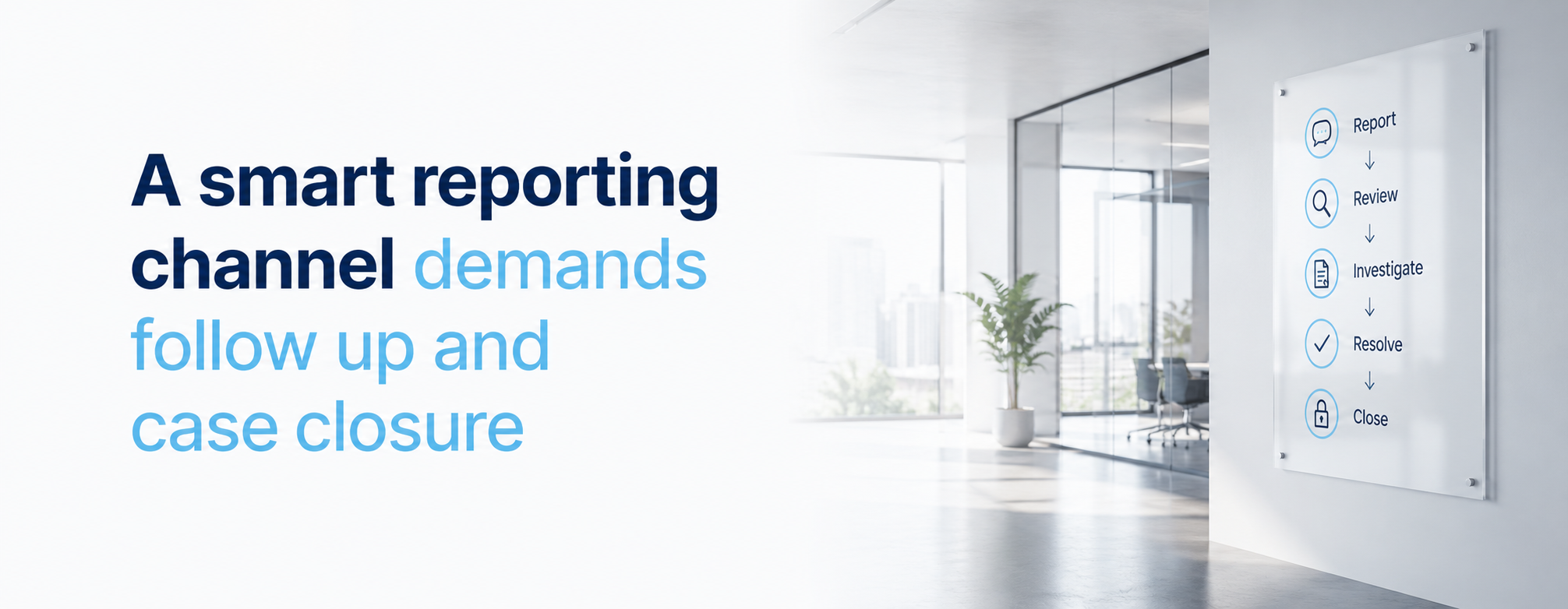
Look for software that allows you to manage the process from initial report through to resolution.
Useful functionality includes assigning case owners, categorising reports, setting investigation stages, maintaining case notes and recording outcomes.
You should also be able to configure escalation routes for sensitive allegations.
For example, a complaint concerning a senior HR leader should not automatically be directed to that same individual.
Having an agreed workflow helps you respond consistently and demonstrate that your organisation is following its policies.
It also reduces the administrative burden on teams that would otherwise rely on spreadsheets, shared folders and email correspondence.
6. Clear audit trails and investigation records
If your organisation faces regulatory scrutiny, an employment dispute or a challenge about how misconduct was handled, you may need to demonstrate what happened after a report was received.
That can be difficult when information is spread across emails, personal folders and different departments.
A purpose-built whistleblowing platform should help you maintain a clear record of case activity.
This might include when a report was received, who was assigned to manage it, what investigative actions were taken, when communications occurred and how the outcome was reached.
You should also be able to document the rationale behind important decisions.
This helps protect the integrity of investigations and supports accountability if your organisation's response is reviewed later.
It's worth remembering that a complete record doesn't automatically mean an investigation was fair. You still need appropriate procedures, impartial decision-making and safeguards for everybody involved.
Our guide to building a workplace misconduct reporting process explains the practical steps involved in moving from disclosure to resolution.
7. Reporting and analytics for compliance teams and boards
Your whistleblowing channel should help you understand what is happening across your organisation.
Individual reports are important, but looking at wider patterns can reveal issues that might otherwise go unnoticed.
For example, you may want to monitor:
- The number and categories of reports received.
- Reporting activity across different locations.
- How long complaints take to assess and resolve.
- Recurring allegations involving particular departments.
- Trends in investigation outcomes.
- Cases requiring escalation or additional oversight.
This information can help you identify weaknesses in workplace controls and assess whether employees have confidence in your reporting processes.
However, be cautious about interpreting reporting volumes in isolation.
An increase in disclosures doesn't necessarily mean misconduct is increasing. It could indicate that employees have become more comfortable raising concerns.
Equally, a lack of reports doesn't prove your workplace is free from wrongdoing.
The purpose of reporting and analytics is to help you ask better questions and take informed action.
8. Scalability across your global workforce
If you're responsible for risk and compliance across multiple countries, your whistleblowing arrangements need to work for employees in different locations.
A reporting channel designed for a small UK office may not be appropriate for an enterprise with thousands of employees, contractors and suppliers operating internationally.
Consider whether your chosen solution can support different reporting structures, languages, accessibility requirements and local regulations.
You may also need to accommodate differences in how cases are investigated or escalated between jurisdictions.
For example, your organisation could have central oversight of whistleblowing activity while maintaining appropriate local processes for handling complaints.
It's also worth assessing how easily new business units or acquired organisations can be added to the system.
Your whistleblowing channel should be able to grow and adapt alongside your business without creating unnecessary administrative complexity.
How do you know if your whistleblowing software is right for your organisation?
Before selecting a provider, involve the people who will actually use the technology.
Your HR and compliance teams need to understand how cases are managed. Your IT and security teams should assess data protection arrangements. Your legal team may need to review regulatory obligations and your board may want reassurance about oversight and accountability.
You should also consider the experience of the employee submitting a report.
Ask yourself whether they can find the reporting channel easily, understand the process and submit a concern without unnecessary barriers.
A useful exercise is to test the platform using a realistic workplace scenario.
Follow the report from initial submission to investigation and resolution. Check how easily you can request more information, restrict access, record decisions and produce management reports.
This will tell you far more about the suitability of the software than a simple feature checklist.
Frequently asked questions
What is the most important feature of whistleblowing software?
Anonymous reporting is one of the most important features because it can help employees feel safer raising concerns. However, it needs to be supported by secure communication, reliable case management and fair investigation procedures. These features work together to make the reporting process effective.
Does a whistleblowing channel need to be managed by a third party?
Not always. Whether you need an independent external channel depends on your organisation, applicable laws and risk profile. However, third-party technology can offer valuable independence, especially when employees are concerned about raising allegations through internal management structures.
Can an anonymous whistleblower still participate in an investigation?
Yes. If your whistleblowing software supports secure two-way communication, you can ask an anonymous reporter follow-up questions and request supporting evidence without requiring them to reveal their identity. Care is still needed to avoid identifying them indirectly.
See how Veremark's whistleblowing software works
If you're reviewing your current whistleblowing arrangements, it's worth seeing how a dedicated reporting platform could support your organisation.
Veremark provides a secure, independent whistleblowing channel that allows employees to report concerns anonymously, while giving your HR and compliance teams the tools to communicate with reporters, manage investigations and maintain clear records.
Book a demo with our team to see how our whistleblowing software works and discuss how it could fit your organisation's requirements.
Read More






FAQs

This depends on the industry and type of role you are recruiting for. To determine whether you need reference checks, identity checks, bankruptcy checks, civil background checks, credit checks for employment or any of the other background checks we offer, chat to our team of dedicated account managers.
Many industries have compliance-related employment check requirements. And even if your industry doesn’t, remember that your staff have access to assets and data that must be protected. When you employ a new staff member you need to be certain that they have the best interests of your business at heart. Carrying out comprehensive background checking helps mitigate risk and ensures a safer hiring decision.
Again, this depends on the type of checks you need. Simple identity checks can be carried out in as little as a few hours but a worldwide criminal background check for instance might take several weeks. A simple pre-employment check package takes around a week. Our account managers are specialists and can provide detailed information into which checks you need and how long they will take.
All Veremark checks are carried out online and digitally. This eliminates the need to collect, store and manage paper documents and information making the process faster, more efficient and ensures complete safety of candidate data and documents.
In a competitive marketplace, making the right hiring decisions is key to the success of your company. Employment background checks enables you to understand more about your candidates before making crucial decisions which can have either beneficial or catastrophic effects on your business.
Background checks not only provide useful insights into a candidate’s work history, skills and education, but they can also offer richer detail into someone’s personality and character traits. This gives you a huge advantage when considering who to hire. Background checking also ensures that candidates are legally allowed to carry out certain roles, failed criminal and credit checks could prevent them from working with vulnerable people or in a financial function.
Trusted by the world's best workplaces




APPROVED BY INDUSTRY EXPERTS


and Loved by reviewers


Transform your hiring process
Request a discovery session with one of our background screening experts today.