
A guide to whistleblowing channel software costs: what to expect and how to budget


Whistleblowing software costs are usually modest compared with the cost of a badly handled disclosure. The real budget question is not only what the hotline costs. It is whether your organisation has a trusted, independent and workable way for people to report misconduct before it becomes a legal, financial or reputational problem.
A whistleblowing system is a control mechanism. It gives employees, contractors and other eligible people a safe route to raise concerns about fraud, harassment, corruption, safety issues, regulatory breaches or other serious misconduct.
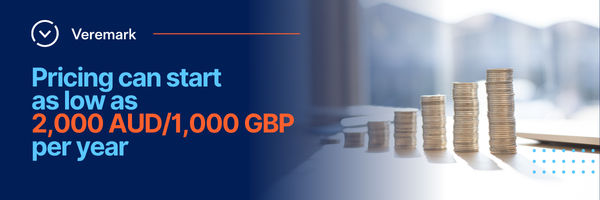
For smaller organisations, pricing can start below 2,000 AUD/1,000 GBP per year. Larger organisations may need phone reporting, case management, policy support and external advice. Your budget should reflect your legal duties, workforce size, reporting risk and internal capability.
Understanding if a whistleblowing policy is part of your regulatory requirements
Start with your legal position. Some organisations must have a whistleblowing policy or internal reporting channel. Others may not be legally required, although the absence of a clear process can still create serious risk.
In Australia, public companies, large proprietary companies and corporate trustees of APRA-regulated superannuation entities must have a whistleblower policy. In the EU, organisations with 50 or more employees are generally required to establish secure internal reporting channels. In the UK financial services sector, FCA rules require relevant firms to maintain internal whistleblowing procedures.
Your regulatory position should shape your budget. A small business may need a simple reporting channel and clear staff communications. A regulated financial services firm, public company or multi-entity group will usually need stronger governance, clear escalation rules, better evidence trails and more formal investigation procedures.
Ignorance is bliss. Right? Whistleblowing policy helps organisations avoid huge financial liabilities
A weak whistleblowing process can make you feel protected because fewer issues reach you. That comfort is false. Poor reporting channels do not remove misconduct. They push it into private conversations, anonymous posts, union complaints, regulator reports or the media.
Whistleblowing failures are expensive because they often compound. A missed report can lead to prolonged misconduct, victimisation claims, regulatory penalties, remediation costs, board disruption and loss of trust.

The UK charity Protect calculated that failures to act on whistleblower reports in major UK scandals, including the Post Office Horizon scandal, Carillion and Lucy Letby, cost taxpayers at least £426 million. These are large public examples, although the same pattern appears in private organisations at a smaller scale. Early warnings are cheaper than late crisis response.
A clear policy helps you show that your organisation took reasonable steps. It sets out who can report, what can be reported, how confidentiality is handled, how conflicts are managed and what happens after a disclosure is received.
Veremark’s article on why a practical whistleblower policy is essential makes a clear point: the policy has to work for the person using it. The reporting route, recipient and protections should be easy to find. Dense legal wording should not bury the action you want someone to take.
This matters when budgeting. Buying software without fixing your policy creates a neat-looking system that staff may still avoid. A practical budget should include policy review, role design, communication and training.
The cost of an outsourced whistleblowing channel
Whistleblowing software costs vary by provider, employee numbers, reporting channels, languages, support level and case management features. Entry-level software for small organisations can start from about $150 to $250 per month, billed annually. Other market estimates put small to mid-sized whistleblowing hotlines at around $1,000 to $5,000 per year, with enterprise programmes ranging from $10,000 to $50,000 per year depending on complexity.
Veremark offers two basic package options and you can also add additional support where needed. Veremark’s team has additional expertise and we can help you design your whistleblowing policy, survey your staff and provide broader consultancy support. That means you can choose a self-service model, ask Veremark to support key design decisions, or use a hybrid approach.
When comparing providers, ask what is included. A low headline price may exclude phone intake, implementation support, case management, data hosting, custom workflows, policy templates, training materials or investigation advice.
Budget for the whole operating model, not just the licence.
In-house vs outsourced whistleblowing hotline
Most organisations already have some form of reporting process. The problem is that many employees do not use it.
Speaking up carries perceived risk. Employees may worry about being identified, facing retaliation, damaging their career, being ignored or seeing no follow-up. When trust is low, silence becomes the default. A UK House of Commons committee report found that 77% of workers who encountered sexual harassment or bullying in the workplace but did not report it. For many, this was linked to fear, lack of psychological safety or the belief that nothing would be done.
That silence has consequences. Misconduct continues, managers miss early warning signs and the organisation loses the chance to act before harm spreads.
An in-house hotline can work if you have trained people, clear independence and enough case volume to maintain capability. The risk is perceived conflict. Employees may not trust a channel controlled by HR, legal or management if the concern involves senior leaders, retaliation or previous poor handling of complaints.
An outsourced whistleblowing hotline can improve perceived independence. It gives employees a reporting route outside ordinary reporting lines and can provide secure reporting, structured intake, case management and clear escalation. Veremark’s guide to in-house vs outsourced whistleblowing hotlines sets out the main trade-offs.
Your budget should reflect this split. Internal models still carry costs, including staff time, training, secure systems, legal review, record keeping and investigation capability. Outsourced models make more of that cost visible through the provider fee.
.png)
The process of setting up a whistleblowing hotline with Veremark
Setting up a whistleblowing hotline with Veremark is designed to be light-touch. For many organisations, onboarding can be completed in as little as 24 hours.
The process usually starts with one onboarding call. Veremark shows you around the platform, explains how reporting and case management work, and provides the materials you need to launch. From there, you can operate on a self-service basis, ask Veremark to support selected steps, or use a hybrid model.
The set-up should cover three core design points.
First, role design. You need to identify the right person or people to receive and assess disclosures. In Australia, this is often framed around the whistleblower protection officer or equivalent role. The person must have the authority, judgement and independence to handle sensitive concerns.
Second, escalation. Your whistleblowing channel needs clear escalation paths before the first report arrives. The process should explain what happens if the disclosure concerns HR, the executive team, the board, a related entity or the usual recipient.
Third, investigation steps. You need a clear method for assessing whether a disclosure qualifies for whistleblower protection, what immediate protections are required, who should investigate and how conflicts will be managed. Veremark’s guidance on effective whistleblower complaint management explains how structured capture, management and resolution help turn reports into action.
How to budget
A sensible budget for whistleblowing software costs should include the platform subscription, phone reporting if required, policy review or drafting, staff communication, and access to investigation or consultancy support.
A small organisation may only need a simple software subscription and clear launch materials. A regulated entity, larger employer or multi-jurisdiction group should budget for policy design, escalation mapping and training.
The cheapest option is rarely the best measure. A better test is whether the system gives workers a safe reporting route and gives you a defensible process for acting on reports.
Whistleblowing software costs should be viewed against the cost of silence. A modest annual spend can give your board and management earlier warning, better records and a clearer path to action.
Setup a demo and discovery call with our Whistleblowing team.

Read More






FAQs

Implementation can be quick for standard software setups, but more complex rollouts with custom workflows, languages, training, and policies may take longer. Veremark can launch an online hotline for your organisation very quickly - but we also offer full consultation prior to roll-out, as well as a white-labeled product for organisations who need this option.
In some jurisdictions and for certain organisations, whistleblowing channels are legally required; requirements depend on company size, location, and applicable regulations.
Anonymity is available should the employee wish to withhold their identity. Built with security and experience in mind, our solution is hosted on an end-to-end encrypted platform.
Trusted by the world's best workplaces




APPROVED BY INDUSTRY EXPERTS
.png)
.png)


and Loved by reviewers


Transform your hiring process
Request a discovery session with one of our background screening experts today.