7 signs your organisation's whistleblowing process isn't working


You have a whistleblowing policy, employees know they can raise concerns, and your HR team has a process for investigating complaints.
On paper, everything looks fine.
But how do you know whether your whistleblowing process is actually working?
For enterprise organisations, having a reporting policy in place is only part of managing workplace misconduct risk. You also need confidence that employees feel safe using it, that reports reach the right people and that concerns are handled appropriately.
Unfortunately, weaknesses in whistleblowing arrangements aren't always obvious until something goes wrong.
An employee may raise allegations externally because they don't trust internal reporting channels. A complaint may sit unresolved for months. Or your organisation could discover that several employees witnessed wrongdoing but felt unable to speak up.
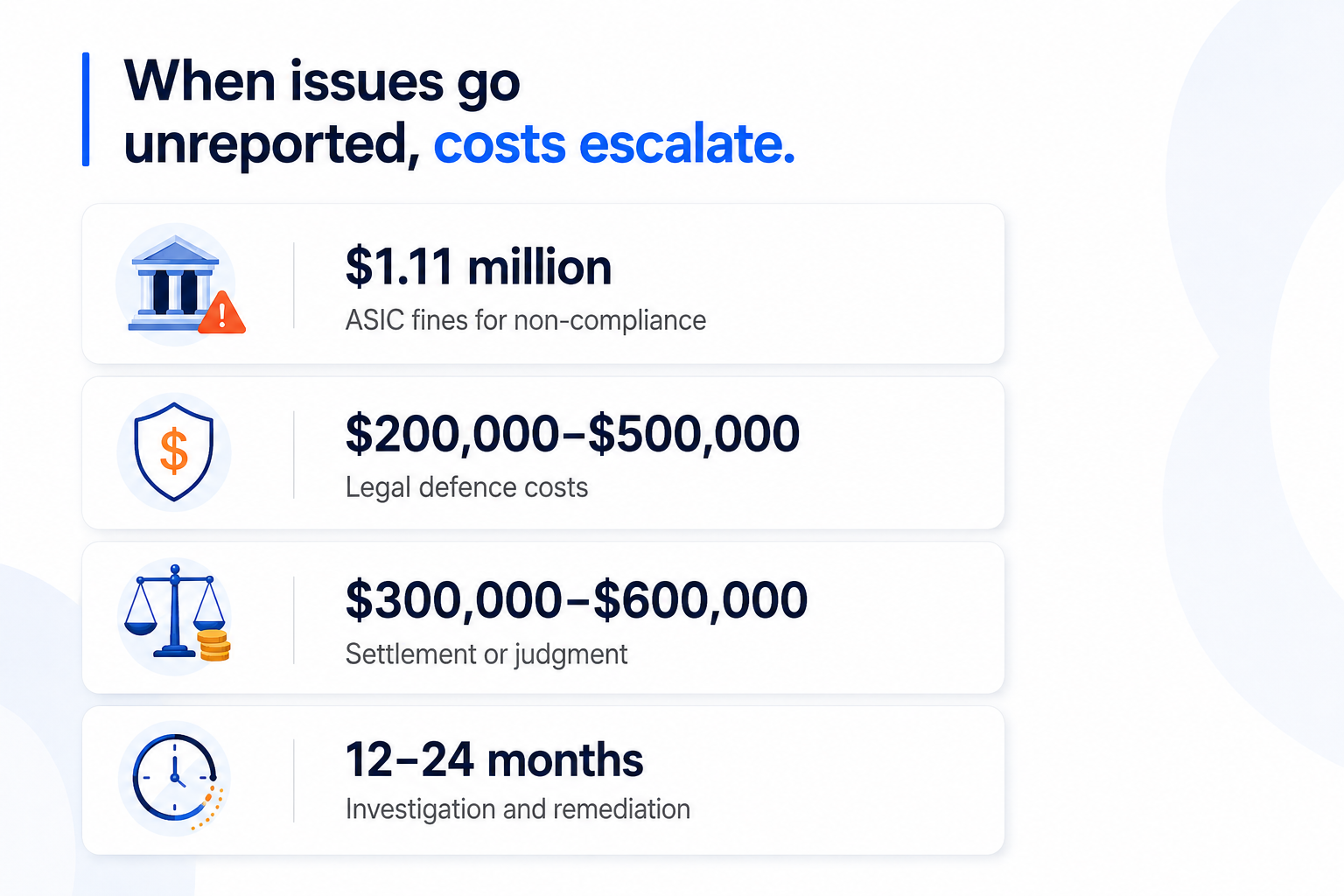
These situations can expose gaps in your reporting processes and leave your business facing significant legal, financial and reputational risks.
Here are seven warning signs that your whistleblowing process may need attention.
How can you tell whether your whistleblowing process is effective?
An effective whistleblowing process should be accessible, trusted, confidential and capable of supporting timely, impartial investigations.
You should be able to demonstrate how concerns are received, assessed, investigated and resolved, while protecting people who raise reports from retaliation.
If your organisation experiences persistently low employee confidence, unclear reporting procedures, inconsistent case management or limited visibility of outcomes, these may indicate that your existing arrangements are not delivering the protection and oversight you need.

1. You receive very few whistleblowing reports
At first glance, a low number of whistleblowing reports might seem positive.
After all, fewer complaints could suggest employees are behaving appropriately and your workplace culture is healthy.
However, it's important to consider whether your employees are genuinely free from concerns or simply reluctant to raise them.
In a large organisation with hundreds or thousands of employees, workplace issues can arise in many different forms, from inappropriate management behaviour to fraud, conflicts of interest and breaches of internal policies.
Some will be resolved through everyday management conversations or HR processes. Others may require a more formal reporting route.
A lack of whistleblowing reports doesn't automatically indicate that your system is ineffective. But it shouldn't be treated as proof that everything is fine either.
Look at other sources of information.
Are concerns appearing in employee surveys, exit interviews, grievances or informal conversations that never reach your whistleblowing channel?
Are there significant differences in reporting activity between departments or locations?
If so, you may need to understand why employees choose other routes or avoid reporting altogether.
As we explain in our article on why organisational silence doesn't necessarily mean safety, a lack of disclosures can leave important risks hidden from leadership.

2. Employees don't trust the confidentiality of your reporting process
Imagine an employee witnesses misconduct involving their direct manager.
They want to raise the issue, but your whistleblowing policy asks them to report concerns to HR.
The problem is that their manager works closely with the HR director.
Even if your HR team would handle the allegation professionally, the employee may worry that their identity could be revealed or that their complaint won't be treated impartially.
This is a common challenge with reporting arrangements that depend entirely on internal structures.
Employees need confidence that their concerns will be received by someone who can act independently.
One way to assess this is through anonymous employee feedback.
Ask whether people understand how to report misconduct, whether they trust the confidentiality of the process and whether they believe concerns involving senior colleagues would be handled fairly.
If employees express doubts, consider offering an independent third-party reporting channel.
A secure, anonymous system can make it easier for someone to report concerns without immediately revealing their identity to colleagues or managers.
You can learn more about how this works in our guide to anonymous whistleblowing technology.
3. Your whistleblowing policy is difficult to find or understand
When was the last time you checked how easily an employee could find your organisation's whistleblowing policy?
If they have to search through a lengthy employee handbook or navigate multiple intranet pages, your reporting process may already be creating unnecessary barriers.
This becomes even more problematic if the procedure is complicated or written primarily for legal and compliance specialists.
An employee who is already nervous about reporting misconduct is unlikely to feel reassured by confusing instructions.
Your policy should explain, in straightforward language, what concerns can be raised, how to report them and what happens after a disclosure is submitted.
It should also make clear what protections are available and how your organisation handles confidentiality and anonymity.
Consider whether the reporting route is accessible to people who don't regularly use your corporate systems, such as contractors, temporary workers or employees in operational roles.
For multinational businesses, language accessibility and differences in local working practices may also affect whether employees use the channel.
One practical test is to ask someone unfamiliar with the process to locate the reporting channel and explain how it works.
If they struggle, you have an opportunity to improve it.
Our article on improving access and anonymity in whistleblowing programmes offers additional guidance.
4. Employees raise concerns but never hear what happens next
One of the quickest ways to undermine confidence in whistleblowing is to make employees feel that their reports disappear into a black hole.
If someone takes the difficult step of reporting misconduct, they'll usually want reassurance that their concern has been received and is being assessed.
Of course, confidentiality and data protection requirements may limit what you can disclose about an investigation.
You may not be able to explain every action taken or share the outcome of disciplinary proceedings involving another employee.
But you should still have a process for acknowledging reports and providing appropriate updates.
This becomes particularly challenging when somebody has submitted a concern anonymously.
If your reporting process relies on a one-way form or anonymous email submission, you may have no reliable way to contact them again.
Modern whistleblowing technology can address this problem through secure two-way messaging.
This allows authorised investigators to ask questions, request further evidence and provide updates while protecting the reporter's anonymity.
Veremark's article on how two-way communication improves whistleblowing follow-up explains why keeping communication open can improve the experience for both employees and investigators.
5. Your investigations are inconsistent or difficult to track
As an HR or compliance leader, you need to know that misconduct allegations are being handled fairly and consistently.
However, this can become difficult when different departments or locations manage complaints using their own processes.
Your UK HR team might record investigations in a spreadsheet, while colleagues in another region use email folders or a separate case management system.
Over time, this can lead to fragmented records, inconsistent handling and limited accountability.
You may find it difficult to establish who is responsible for a case, when the last action was taken or whether important evidence has been reviewed.
These gaps become particularly concerning when an investigation is challenged by an employee, regulator or external adviser.
A more structured approach gives you clear procedures for receiving, categorising, investigating and resolving reports.
Ideally, you should be able to maintain a central case record that documents key actions, decisions and communications.
Your system should also support appropriate escalation where complaints involve senior leaders or potential conflicts of interest.
For further guidance, read our article on building a misconduct reporting process that works.
6. Your leadership team has limited visibility of whistleblowing risks
Your board may receive regular updates on financial performance, cybersecurity and operational risk.
But how much information does it receive about workplace misconduct and whistleblowing activity?
If your compliance team can only provide the total number of complaints received each year, your organisation may be missing valuable opportunities to identify emerging risks.
For example, several reports involving the same department could suggest a management issue that requires closer attention.
Repeated allegations of bullying, discrimination or policy breaches across a particular business unit may indicate a wider cultural problem.
Your leadership team doesn't necessarily need access to the personal details of individual cases.
However, it should have enough appropriate information to understand reporting trends, material risks and whether your organisation is responding effectively.
This could include case categories, investigation timescales, recurring themes and actions taken to address systemic issues.
It's also important to interpret these figures carefully.
High reporting volumes may reflect growing trust in your reporting arrangements, while low volumes might indicate either fewer concerns or reluctance to speak up.
If you're not regularly reviewing these patterns, you could be overlooking early warnings.
7. Employees only report misconduct after the situation has escalated
Perhaps the clearest warning sign is discovering that people knew about misconduct long before anybody formally reported it.
Imagine a workplace investigation reveals that several employees had concerns about a manager's behaviour over the previous year.
Some discussed it with colleagues. Others considered raising a complaint but decided against it.
By the time the matter reaches HR, the allegations have become more complex, relationships have deteriorated and employees may have already left the organisation.
You now have to investigate what happened, understand why concerns weren't raised earlier and consider whether your reporting arrangements contributed to the delay.
This is exactly why an effective speak-up culture matters.
Employees should understand that raising concerns is encouraged and that their reports will be taken seriously.
Your managers should also know how to respond appropriately when issues are brought to their attention.
Importantly, employees need a safe alternative when they aren't comfortable approaching management.
An independent whistleblowing channel can provide that option.
As we explain in our guide to proactively reducing workplace misconduct, identifying concerns earlier gives your organisation a better opportunity to address problems before they become more damaging.
Frequently asked questions
How do you measure the effectiveness of a whistleblowing programme?
You can assess effectiveness by reviewing employee confidence, reporting accessibility, case handling times, investigation outcomes and evidence of appropriate follow-up. Employee surveys and case quality reviews are also useful. Avoid relying solely on the number of reports received.
Does a low number of whistleblowing reports mean your organisation has a healthy culture?
Not necessarily. Low reporting volumes may indicate fewer incidents, effective informal resolution processes or reluctance to speak up. You need to consider reporting data alongside employee feedback and other indicators of workplace risk.
What should you do if employees don't trust your internal reporting process?
Start by understanding the reasons behind their concerns. You may need to improve communication, strengthen confidentiality safeguards, provide training or introduce an independent reporting option. Most importantly, employees need to see that concerns are handled fairly and that retaliation is not tolerated.
Strengthen your whistleblowing process with Veremark
If you're concerned that your current reporting arrangements could be leaving workplace risks hidden, it may be time to consider a more effective approach.
Veremark's whistleblowing software gives employees a secure, independent and anonymous way to report misconduct, while helping your HR and compliance teams receive, manage and investigate concerns through a centralised platform.
With secure two-way communication, configurable workflows and case management functionality, you can create a more consistent reporting experience across your organisation.
Book a demo with our team, to see how our whistleblowing software works and how it could help you strengthen your reporting processes.

Read More






FAQs

This depends on the industry and type of role you are recruiting for. To determine whether you need reference checks, identity checks, bankruptcy checks, civil background checks, credit checks for employment or any of the other background checks we offer, chat to our team of dedicated account managers.
Many industries have compliance-related employment check requirements. And even if your industry doesn’t, remember that your staff have access to assets and data that must be protected. When you employ a new staff member you need to be certain that they have the best interests of your business at heart. Carrying out comprehensive background checking helps mitigate risk and ensures a safer hiring decision.
Again, this depends on the type of checks you need. Simple identity checks can be carried out in as little as a few hours but a worldwide criminal background check for instance might take several weeks. A simple pre-employment check package takes around a week. Our account managers are specialists and can provide detailed information into which checks you need and how long they will take.
All Veremark checks are carried out online and digitally. This eliminates the need to collect, store and manage paper documents and information making the process faster, more efficient and ensures complete safety of candidate data and documents.
In a competitive marketplace, making the right hiring decisions is key to the success of your company. Employment background checks enables you to understand more about your candidates before making crucial decisions which can have either beneficial or catastrophic effects on your business.
Background checks not only provide useful insights into a candidate’s work history, skills and education, but they can also offer richer detail into someone’s personality and character traits. This gives you a huge advantage when considering who to hire. Background checking also ensures that candidates are legally allowed to carry out certain roles, failed criminal and credit checks could prevent them from working with vulnerable people or in a financial function.
Trusted by the world's best workplaces




APPROVED BY INDUSTRY EXPERTS


and Loved by reviewers


Transform your hiring process
Request a discovery session with one of our background screening experts today.