5 ways to improve your global background screening process in 2027


Managing background screening across a global workforce has never been particularly straightforward. But as we head into 2027, there are a few new challenges worth paying attention to.
AI is changing how people apply for jobs, making it increasingly difficult to distinguish genuine credentials from misleading information. Compliance requirements continue to vary between countries, and there's growing pressure on HR teams to get new employees onboarded quickly, without cutting corners.

If you're responsible for employee screening, compliance or onboarding, you'll know how difficult it can be to strike the right balance.
You need a process that's thorough enough to protect your organisation, flexible enough to meet local requirements and efficient enough to keep your employees and internal teams happy.
So, what should you be doing differently in 2027?
Here are five practical ways to strengthen your global background screening process, reduce unnecessary administration and make onboarding easier for everyone involved.
1. Review whether your screening process is equipped to deal with AI-driven hiring fraud
AI has made it easier than ever for job applicants to present themselves in the best possible light.
A candidate can now produce a polished CV, write an impressive cover letter and prepare convincing interview responses with relatively little effort.
For most people, these tools are simply a way to improve their applications. But they're also creating opportunities for dishonesty.
Fabricated employment histories, exaggerated qualifications and even deepfake interviews are becoming concerns for employers. And when someone uses AI to misrepresent their experience or identity, the consequences can extend well beyond making a poor hiring decision.

For organisations, particularly those employing people in positions of financial responsibility or with access to sensitive information, the potential risks include fraud, data breaches and reputational damage.
What should you be doing differently in 2027?
Take a closer look at the checks you're currently running and consider whether they're sufficient to identify misleading information.
Are you independently verifying previous employment and educational qualifications? Do your identity verification processes provide enough assurance that someone is who they claim to be?
It's also worth reviewing whether you have the right screening requirements in place for higher-risk positions.
You don't necessarily need to introduce more checks for everyone. But you should be confident that your screening policy reflects the risks associated with different roles.
And if your organisation is increasingly using AI within recruitment, make sure your background screening policies have kept pace.
Further reading: The rise of AI hiring fraud: Are you hiring the right person or just the right CV?
2. Make sure your global screening policies account for local compliance requirements
If your organisation operates in several countries, keeping your background screening policies consistent can be a challenge.
Different jurisdictions have different rules around what employers can check, how information can be obtained and how personal data should be handled.
For example, criminal record checks may be a routine part of onboarding in one country but subject to strict limitations in another.
Data protection requirements can also differ, particularly when employee information is being processed or transferred internationally.
And with developments such as the EU AI Act introducing further considerations around the use of AI in employment, it's important to keep your policies under regular review.
What should you be doing differently in 2027?
Start by reviewing whether your organisation has a clear global screening framework.
Ideally, you want to establish consistent standards for managing workforce risk while allowing for the different legal requirements in each country.
For example, your policy might require employment and identity verification for certain categories of employees globally, but the way those checks are carried out may need to vary by location.
You should also consider how easy it is for your teams to keep track of local requirements, especially when entering new markets.
If you're managing multiple screening providers across different regions, it may be worth considering whether a single global partner could simplify compliance management and give you better oversight of your screening activity.
A standardised approach can help you maintain consistency and accountability, but it should never come at the expense of local compliance.
3. Remove unnecessary friction from your employee onboarding process
Background screening is an important part of onboarding, but it's also an area where unnecessary delays can quickly create frustration.
Think about what happens when a new employee is asked to complete lengthy forms, upload multiple documents or provide information they've already submitted earlier in the hiring process.
If the instructions aren't clear or they don't know what's happening with their checks, they're likely to contact your HR team for updates.
And if your organisation is onboarding large numbers of employees, these small frustrations can quickly turn into a significant administrative burden.
What should you be doing differently in 2027?
Look at the screening process from the perspective of someone joining your organisation.
Is it easy to complete? Can employees submit their information and documents from their phone? Are the instructions straightforward, and do they know who to contact if they need help?
It's also worth considering how much information you're asking people to provide and whether every request is necessary.
Where appropriate, a screening platform that integrates with your existing HR systems can help reduce duplicated data entry and make the process feel more joined-up.
Automated updates can also make a difference, allowing employees to track their progress without having to contact your team.
A smoother screening experience can help new employees feel more confident about joining your organisation, while reducing the number of queries and follow-ups your HR team has to manage.
4. Give your HR team more time back through automation
When you're responsible for screening employees across multiple locations, there's a surprising amount of administration involved.
From initiating checks and managing documentation to following up on outstanding results, it's easy for your team to spend hours on tasks that don't necessarily require their expertise.
And as your organisation grows, those demands only increase.
If your team is still managing screening through separate systems, spreadsheets or manual email exchanges, there may be opportunities to make things considerably easier.
What should you be doing differently in 2027?
Start by looking at how background screening fits into your wider HR technology setup.
Does your screening provider integrate with your Applicant Tracking System (ATS) or Human Resource Information System (HRIS)? Can your team initiate checks, monitor progress and access results without constantly switching between platforms?
With the right integrations, much of the routine administration can be automated.
For example, you could set up standard screening packages based on employee roles, automatically notify relevant team members when checks are complete and keep screening records in one centralised location.
This can be particularly valuable for organisations with decentralised HR teams, where different departments or countries may currently be managing screening in different ways.
Automation can also help reduce the risk of checks being missed or inconsistently applied.
Of course, you'll still need people to review discrepancies and make decisions where additional investigation is required.
But removing repetitive administrative tasks can give your HR and Compliance teams more time to focus on the issues that genuinely need their attention.

5. Use your screening data to understand where your biggest risks are
When was the last time you reviewed how effective your background screening programme actually is?
For many organisations, screening performance is measured largely by turnaround times. And while speed is important, it doesn't tell you whether you're running the right checks or identifying the risks that matter most.
For example, are certain checks uncovering more discrepancies than others? Are some departments consistently experiencing onboarding delays? Are your screening requirements being applied equally across different offices and regions?
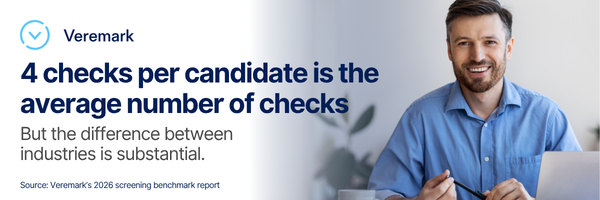
Without this information, it can be difficult to know where improvements are needed.
What should you be doing differently in 2027?
Consider introducing regular reviews of your screening performance.
Some useful metrics to monitor include:
- Screening turnaround times: How long are checks taking, and where are the biggest delays?
- Discrepancy rates: Which types of checks are identifying the most inconsistencies?
- Employee completion rates: How easily are new starters getting through the screening process?
- Policy compliance: Are the correct checks being completed consistently across departments and countries?
- Administrative workload: How much time is your HR team spending managing screening activity?
You should also consider whether your screening requirements still reflect the risks associated with your workforce.
For example, if your organisation has expanded into new markets, introduced more remote working arrangements or changed the responsibilities of certain roles, your existing screening policy may need updating.
And remember that workforce risk doesn't necessarily end once an employee has completed onboarding.
Depending on your industry, regulatory obligations and the nature of particular roles, you may also want to review whether ongoing monitoring or periodic rescreening should form part of your wider employee compliance strategy.
Regularly reviewing your screening data can help you spot gaps, make better-informed decisions and direct your resources towards the areas that need them most.
Is your global background screening process ready for 2027?
The challenges facing HR and Compliance leaders are changing.
AI is introducing new hiring risks, global compliance remains complex, and internal teams are being asked to do more with the resources they already have.
But improving your background screening process doesn't have to mean introducing more checks, creating additional work or slowing down employee onboarding.
Often, the biggest improvements come from taking a closer look at your existing processes.
Are you verifying the information that matters most? Are your policies consistent and compliant across different countries? Could better technology help you reduce administration and improve the experience for new employees?
These are all useful questions to ask as you review your priorities for 2027.
A more effective screening programme can help you reduce workforce risk, maintain compliance and give your HR team more time to focus on supporting the people joining your organisation.
Make global background screening easier with Veremark
Whether you're reviewing your screening policies, expanding into new markets or looking for ways to make employee onboarding more efficient, Veremark can help.
Our global background screening platform enables you to verify employees across 180+ countries, with access to identity, employment, education, criminal record and other role-relevant checks.
With integrations into leading HR and recruitment systems, a streamlined candidate experience and a centralised platform for managing your checks, Veremark helps you reduce administration while maintaining confidence in your workforce.
Speak to our team to discover how Veremark can help you build a more efficient global background screening process in 2027.




FAQs

This depends on the industry and type of role you are recruiting for. To determine whether you need reference checks, identity checks, bankruptcy checks, civil background checks, credit checks for employment or any of the other background checks we offer, chat to our team of dedicated account managers.
Many industries have compliance-related employment check requirements. And even if your industry doesn’t, remember that your staff have access to assets and data that must be protected. When you employ a new staff member you need to be certain that they have the best interests of your business at heart. Carrying out comprehensive background checking helps mitigate risk and ensures a safer hiring decision.
Again, this depends on the type of checks you need. Simple identity checks can be carried out in as little as a few hours but a worldwide criminal background check for instance might take several weeks. A simple pre-employment check package takes around a week. Our account managers are specialists and can provide detailed information into which checks you need and how long they will take.
All Veremark checks are carried out online and digitally. This eliminates the need to collect, store and manage paper documents and information making the process faster, more efficient and ensures complete safety of candidate data and documents.
In a competitive marketplace, making the right hiring decisions is key to the success of your company. Employment background checks enables you to understand more about your candidates before making crucial decisions which can have either beneficial or catastrophic effects on your business.
Background checks not only provide useful insights into a candidate’s work history, skills and education, but they can also offer richer detail into someone’s personality and character traits. This gives you a huge advantage when considering who to hire. Background checking also ensures that candidates are legally allowed to carry out certain roles, failed criminal and credit checks could prevent them from working with vulnerable people or in a financial function.
Trusted by the world's best workplaces




APPROVED BY INDUSTRY EXPERTS



and Loved by reviewers


Transform your hiring process
Request a discovery session with one of our background screening experts today.