
7 mistakes that increase the risk of serious misconduct in the Energy & Infrastructure sector


Serious misconduct investigations in the Energy & Infrastructure sector fail when you delay action, define allegations poorly, or lose control of sensitive records. Sometimes the investigation isn’t to blame - you simply never knew about the misconduct because nobody reported it.
Energy & Infrastructure companies in Australia need a reporting channel suited to safety-critical work, remote operations, contractor workforces,Australian whistleblower protections, and above all else ‘a tool that encourages workers to speak up.
Conduct concerns in Energy & Infrastructure businesses can point to risks beyond the immediate employment matter.
An allegation may involve falsified maintenance records, pressure to bypass an isolation procedure, retaliation after a safety report, harassment at a remote site or a conflict of interest in contractor selection.
What first appears to be a HR complaint may expose a wider work health and safety, corporate governance or operational control failure. You should therefore assess conduct reports promptly and determine which internal, regulatory and legal obligations may apply.
Here are seven mistakes that can increase serious misconduct risk and leave directors unable to defend the organisation’s response.
1. Not giving your employees the option to raise a complaint anonymously
Giving employees the option to raise concerns anonymously can make the difference between misconduct being reported early and remaining hidden.
Employees may stay silent if they fear retaliation, reputational damage or being treated differently by colleagues and managers, even where formal protections exist. Anonymous reporting removes an important psychological barrier by allowing people to speak up without immediately exposing their identity.
The demand for this option is clear in Australia: the Fair Work Ombudsman received 25,608 anonymous reports in 2024–25, a 50% increase on the previous year. (Fair Work Ombudsman)
Australian whistleblower protections also explicitly allow eligible whistleblowers to make disclosures anonymously.
.jpg)
In August 2025, the Federal Court ordered Queensland coal producer TerraCom to pay a $7.5 million penalty after the company admitted breaching Australia's whistleblower protection laws.
A former employee had raised concerns relating to coal-quality results. TerraCom subsequently issued public statements describing the allegations as false. The company admitted that the tone and content of those statements caused the whistleblower hurt, humiliation, distress and reputational damage.
It became ASIC's first enforcement outcome for contraventions of Australia's whistleblower provisions. TerraCom was also ordered to pay $1 million towards ASIC's legal costs.
The case demonstrates an important point for Energy & Infrastructure employers: your response to the person raising a concern can create significant regulatory risk of its own, regardless of whether the underlying allegation is ultimately substantiated.
2. Failing to embrace contractors or agency workers in your reporting channels
One of the biggest mistakes made in this industry sometimes is failing to include contractors in your speak-up processes.
Misconduct reporting channels shouldn’t stop at permanent employees. Contractors, agency workers and other contingent staff often work closest to operational, safety and compliance risks, yet may feel less secure about speaking up because their employment relationship is more precarious.
Excluding them from reporting channels can create a significant blind spot, allowing unsafe practices, fraud, harassment or other misconduct to go unreported. A strong whistleblowing programme should give everyone working across the organisation a clear and confidential way to raise concerns.
3. A lack of information or evidence to support the complaint
Misconduct complaints can be difficult to investigate fairly when there is little information or evidence to support what has been reported.
Without dates, documents, screenshots, photographs or other relevant material, investigators may struggle to establish what happened, increasing the risk of delays, inconclusive outcomes or concerns being dismissed too quickly.
A strong whistleblowing system should allow the employee to securely upload supporting evidence at the point of reporting and throughout the investigation, giving you a clearer evidence trail and helping you assess allegations consistently, confidentially and on their merits.
4. Delaying action while workers rotate off site
Delay damages evidence in any investigation. It creates particular problems in Energy & Infrastructure operations where employees and contractors work rotating rosters, move between projects or leave site after short assignments.
A witness may finish a remote rotation before an investigator contacts them. A contractor may demobilise. CCTV, access logs or operational data may be deleted under standard retention schedules.
You should acknowledge the report promptly and complete an immediate risk assessment. A delay may be unavoidable where specialist technical evidence is required. The reason should be documented, and the people involved should receive appropriate updates.
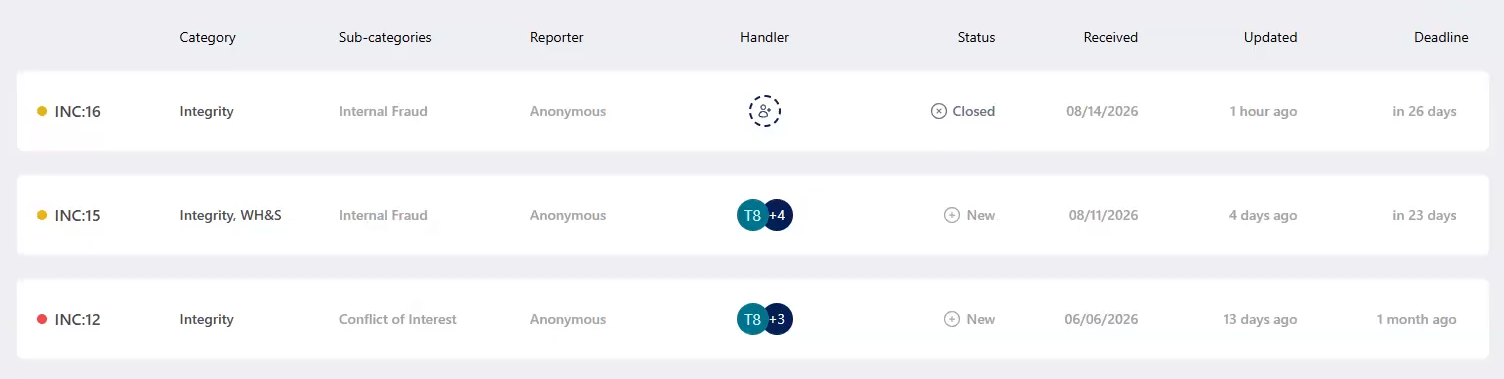
Our whistleblowing software lets you view how much time has lapsed since a report came in, the level of urgency, and when it was last updated.
5. Appointing an investigator too closely connected with the whistleblower
Energy & Infrastructure projects often involve close commercial and professional relationships between operators, asset owners, joint-venture partners, engineering firms and specialist contractors.
These relationships can compromise independence.
An internal investigator may report to the executive who approved the disputed decision. A site manager may have worked with the contractor for years. A safety adviser may already have given advice on the incident under review.
An investigator must understand technical evidence without relying entirely on the people whose decisions are being examined.
External support may be appropriate where the allegation concerns a director, a senior safety leader, a major contractor, serious fraud or concealment of a safety event.
The organisation should also separate the investigation role from the final disciplinary decision where practical. This gives the decision-maker a better opportunity to assess the evidence independently.
6. Keeping investigation records in email inboxes
Serious misconduct investigations can generate large amounts of sensitive information.
The original report may sit in an executive’s inbox. Photographs may remain on a site phone. Interview records may be stored on a local drive. Actions may be tracked through a spreadsheet or calendar reminder.
This creates gaps when a case handler changes roles, starts to leave or moves to another project.
Veremark’s independent reporting channel gives employees and contractors an anonymous, encrypted route for raising serious concerns. The person who raised the complaint can upload evidence, and case handlers can continue communicating with the reporter through secure two-way messaging without requiring them to reveal their identity.
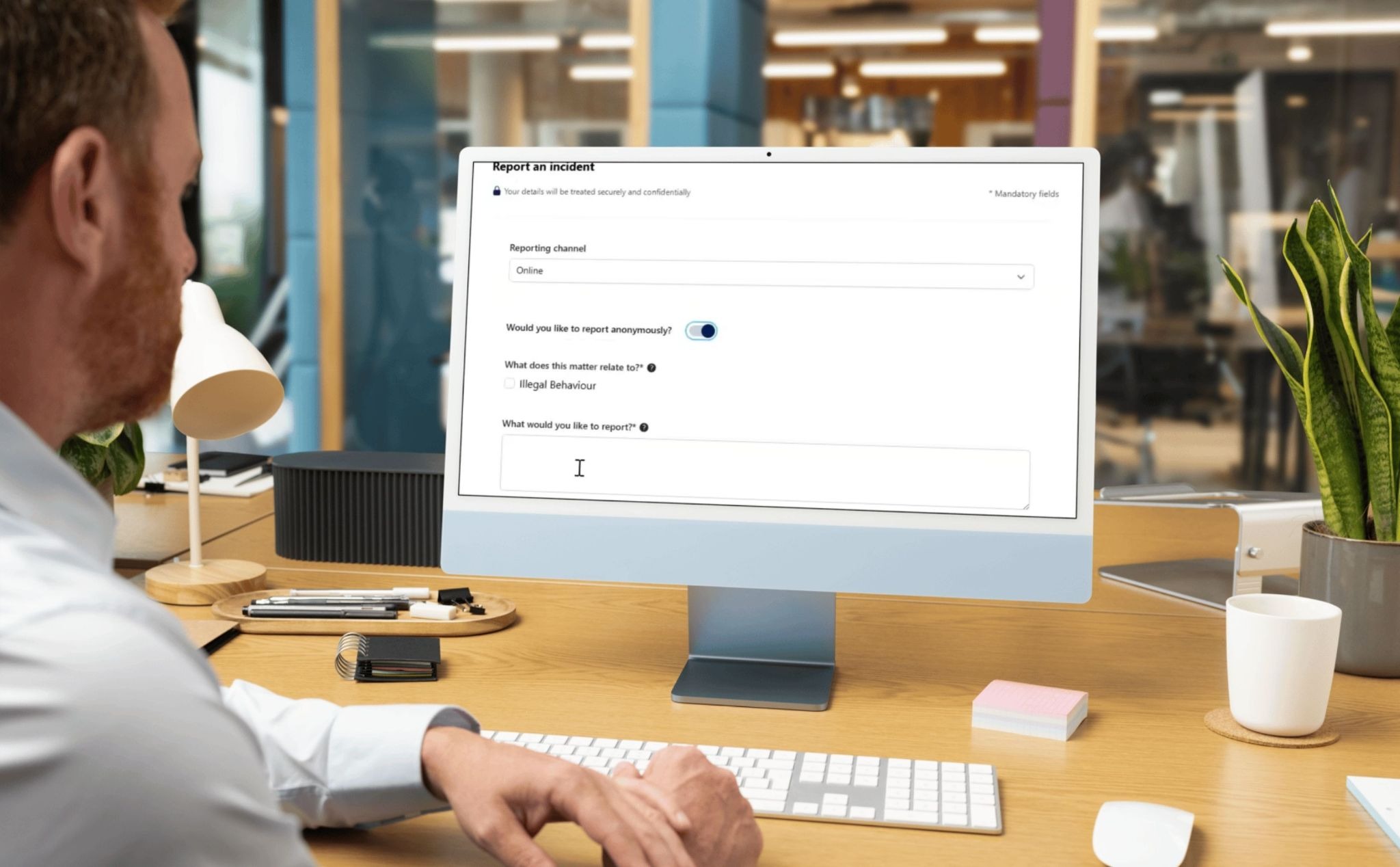
The initial report, evidence, messages and follow-up actions remain connected to one case. Compliance teams do not have to reconstruct the investigation from scattered email chains.
A central case record also helps the organisation protect confidentiality. ASIC warns that breaching a whistleblower’s confidentiality or causing detriment can result in civil or criminal consequences.
For directors, Veremark provides clearer evidence of when the report arrived, what risks were assessed and how the organisation responded.
7. Missing patterns of behaviour, connected complaints, or a rise in complaints outside of benchmark expectations
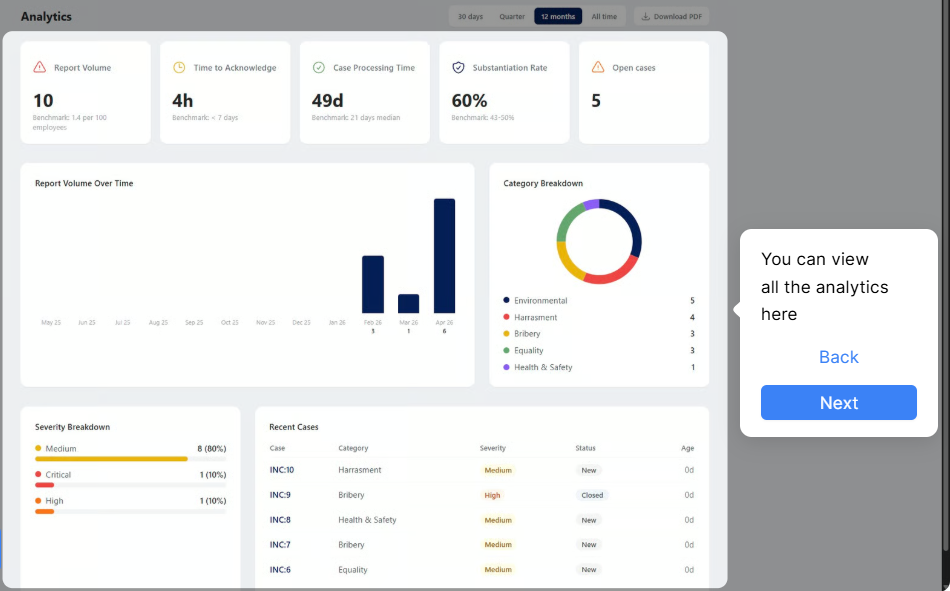
A single complaint may look isolated, but patterns often only become visible when reports are viewed together. If complaints are managed across emails, spreadsheets or disconnected systems, organisations can miss repeat allegations, recurring issues involving the same teams or managers, or a sudden rise in reports that signals a wider cultural or operational problem.
A connected reporting dashboard helps bring this information together, making it easier to identify trends, link related cases and spot emerging risks earlier. That gives HR, compliance and leadership teams a much stronger basis for deciding when an issue needs broader investigation or intervention.
Apply Australian whistleblower requirements correctly
All Australian companies must comply with the corporate whistleblower protection provisions in the Corporations Act. Public companies and large proprietary companies must also maintain a compliant whistleblower policy.
ASIC has published guidance on good practices for handling whistleblower disclosures and has stressed that reporting arrangements should encourage people to speak up and support effective handling of concerns.
Give employees and contractors a safer starting point
Good investigations depend on receiving credible information early.
Employees may remain silent when the report concerns a senior manager, a safety-critical decision or a contractor with commercial influence. Our independent whistleblowing platform gives employees, former employees and contractors a route outside the immediate site management chain.
The channel supports anonymous reporting, end-to-end encryption and secure follow-up. Investigators can request further detail or documents while the reporter remains anonymous.
Build a reporting channel suited to Energy & Infrastructure operations
Your reporting channel should do more than receive complaints. It should help you assess concerns promptly, manage investigations consistently and show directors where risk may be building.
Veremark connects an accessible employee reporting experience with secure case management and board-ready analytics. You gain clearer oversight, while your employees gain a reporting route designed to protect their identity and make speaking up easier.
When you rely on inboxes, spreadsheets or basic hotlines, gaps are harder to spot and explain, and employees stay silent. Better workplace conduct reporting software gives you a usable record of concerns, responses and outcomes.

Read More



.png)

.png)
FAQs

This depends on the industry and type of role you are recruiting for. To determine whether you need reference checks, identity checks, bankruptcy checks, civil background checks, credit checks for employment or any of the other background checks we offer, chat to our team of dedicated account managers.
Many industries have compliance-related employment check requirements. And even if your industry doesn’t, remember that your staff have access to assets and data that must be protected. When you employ a new staff member you need to be certain that they have the best interests of your business at heart. Carrying out comprehensive background checking helps mitigate risk and ensures a safer hiring decision.
Again, this depends on the type of checks you need. Simple identity checks can be carried out in as little as a few hours but a worldwide criminal background check for instance might take several weeks. A simple pre-employment check package takes around a week. Our account managers are specialists and can provide detailed information into which checks you need and how long they will take.
All Veremark checks are carried out online and digitally. This eliminates the need to collect, store and manage paper documents and information making the process faster, more efficient and ensures complete safety of candidate data and documents.
In a competitive marketplace, making the right hiring decisions is key to the success of your company. Employment background checks enables you to understand more about your candidates before making crucial decisions which can have either beneficial or catastrophic effects on your business.
Background checks not only provide useful insights into a candidate’s work history, skills and education, but they can also offer richer detail into someone’s personality and character traits. This gives you a huge advantage when considering who to hire. Background checking also ensures that candidates are legally allowed to carry out certain roles, failed criminal and credit checks could prevent them from working with vulnerable people or in a financial function.
Trusted by the world's best workplaces




APPROVED BY INDUSTRY EXPERTS
.png)
.png)


and Loved by reviewers


Transform your hiring process
Request a discovery session with one of our background screening experts today.