
Clinician led occupational health checks: what they cover and when to use them


An occupational health check confirms that a candidate is medically fit to carry out the specific duties of the role they've been offered. It's not a general health screen for every hire. It's a targeted check for roles where fitness matters to safety and performance, covering a health questionnaire, vaccination records, drug and alcohol testing and physical fitness, assessed by a clinician.
Why occupational health checks matter
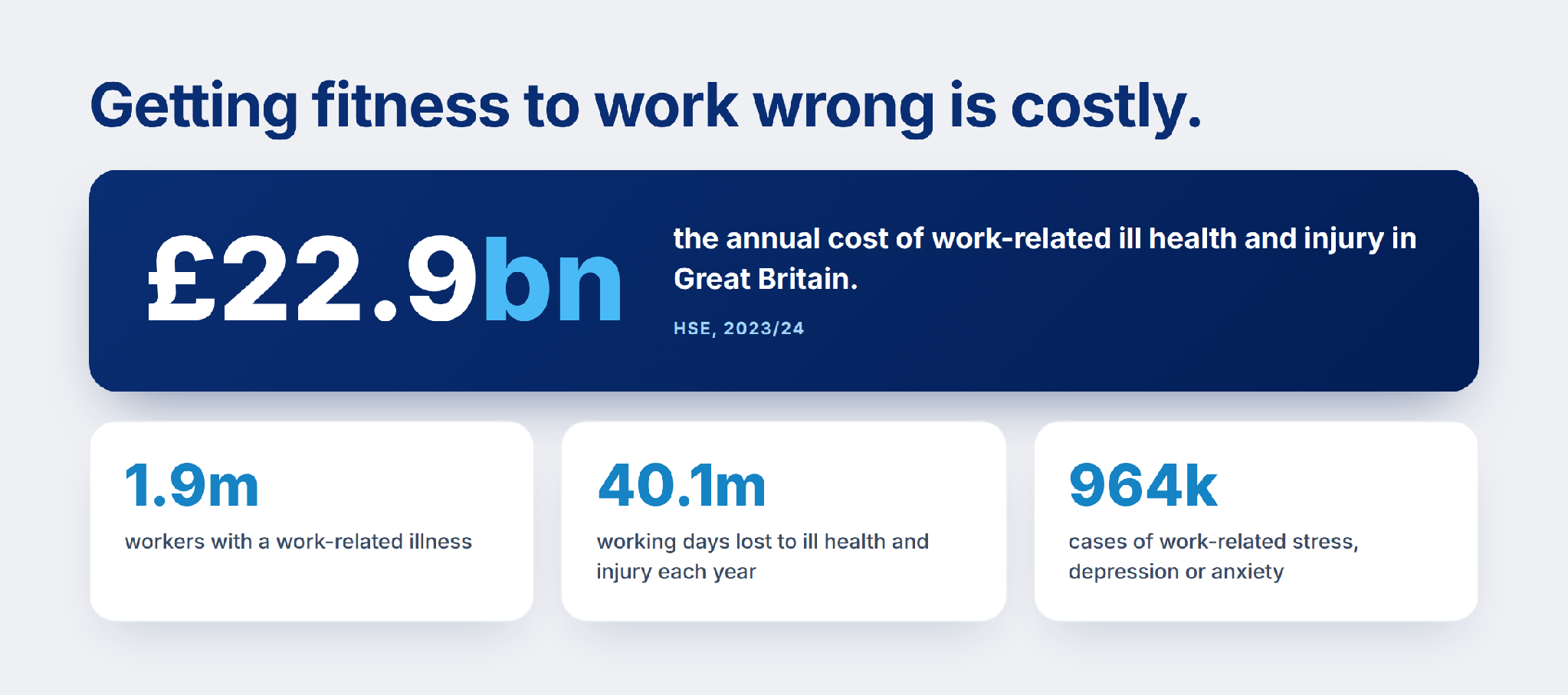
Work-related ill health is expensive and common. The HSE estimates it costs Great Britain £22.9 billion a year, with 1.9 million workers reporting a work-related illness and 40.1 million working days lost to ill health and injury (HSE, 2023/24 and 2024/25).
A pre-employment health check won't fix all of that, but for the right roles it does two useful things. It confirms someone can safely do the job in front of them, which matters most for safety-critical work like driving, operating machinery, healthcare or working at height. And it surfaces any reasonable adjustments early, so support is in place from day one rather than after a problem.
What an occupational health check covers
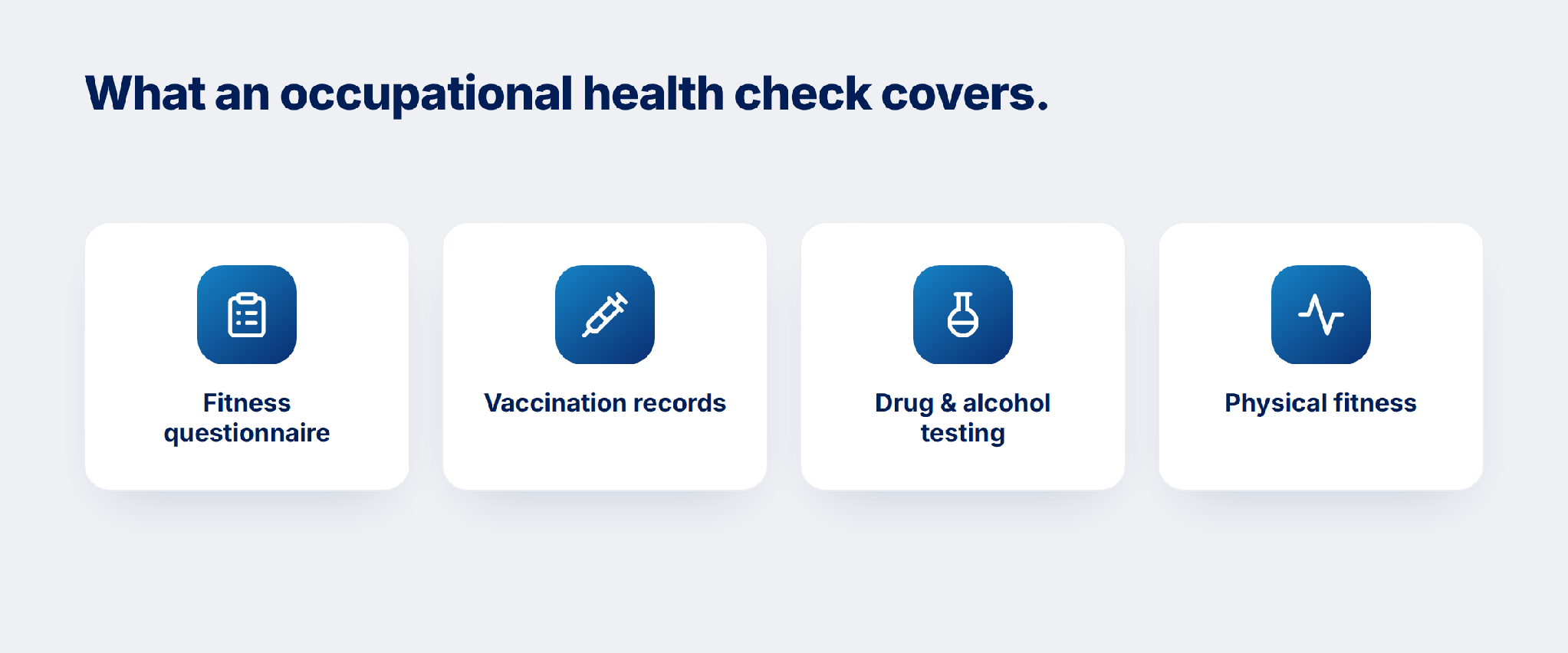
The exact scope depends on the role. A fitness questionnaire is the baseline. Safety-critical and physical roles add drug and alcohol testing and a physical fitness assessment. Roles involving patients, travel or specific environments add vaccination checks. The results can be combined with your other checks to confirm eligibility to work or travel.
The assessment is clinician-led, and that's the point. You receive a clear fitness-for-work outcome and any recommended adjustments. You don't receive the candidate's underlying medical detail, which stays confidential with the occupational health professional.
When to run one, and when not to
Run it where fitness is genuinely part of the job: transport and logistics, manufacturing, construction, healthcare, emergency services, energy, aviation, and roles that require travel or specific vaccinations. For a desk-based role with no physical or safety demands, an occupational health check is intrusive without being useful, and it's harder to justify. Match the check to the role, not the other way round.
Industries and roles that need an occupational health check
Fitness matters most where the job is physical, safety-critical or involves travel. It's standard for:
- Transport & logistics: HGV and PSV drivers, forklift and warehouse operators
- Construction & manufacturing: Machinery operators, working-at-height and physically demanding roles
- Healthcare & social care: Clinical and patient-facing staff needing vaccinations and fitness
- Energy, utilities & mining: Safety-critical field, plant and offshore roles
- Aviation & emergency services: Pilots, cabin crew and responders held to medical standards
- Roles requiring travel: Postings that need vaccinations or fitness to travel
Doing it lawfully
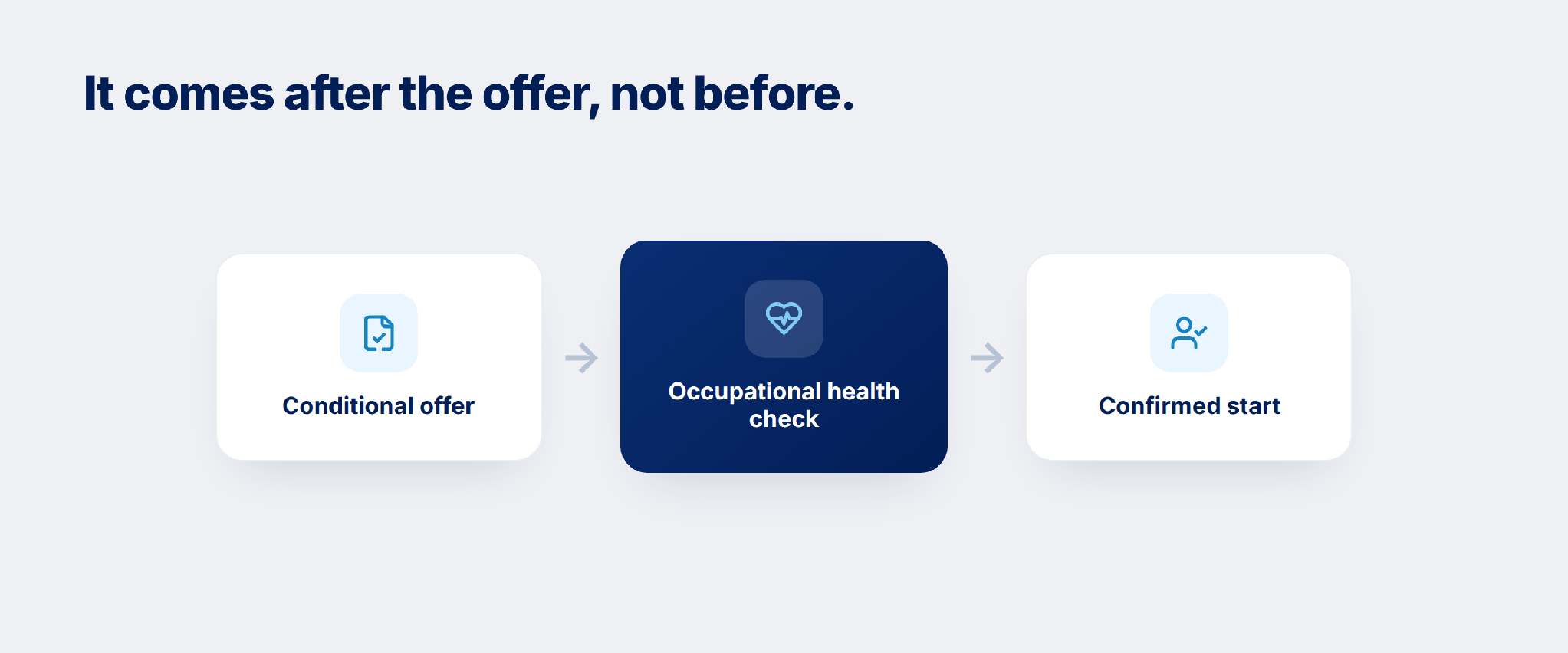
Timing is where employers most often go wrong. Under the Equality Act 2010, you generally can't ask about a candidate's health or disability before making a job offer, so an occupational health check belongs after a conditional offer, not during shortlisting.
Health information is special category data under GDPR, so it needs a lawful condition, tight access and secure handling. Keep the purpose clear too: the check is there to confirm fitness and identify adjustments, not to screen out disability. Where an assessment flags a limitation, the duty to consider reasonable adjustments comes first.
How Veremark runs occupational health checks
Occupational health screening only works if it's handled properly: clinician-led, compliant, and joined up with the rest of your checks.
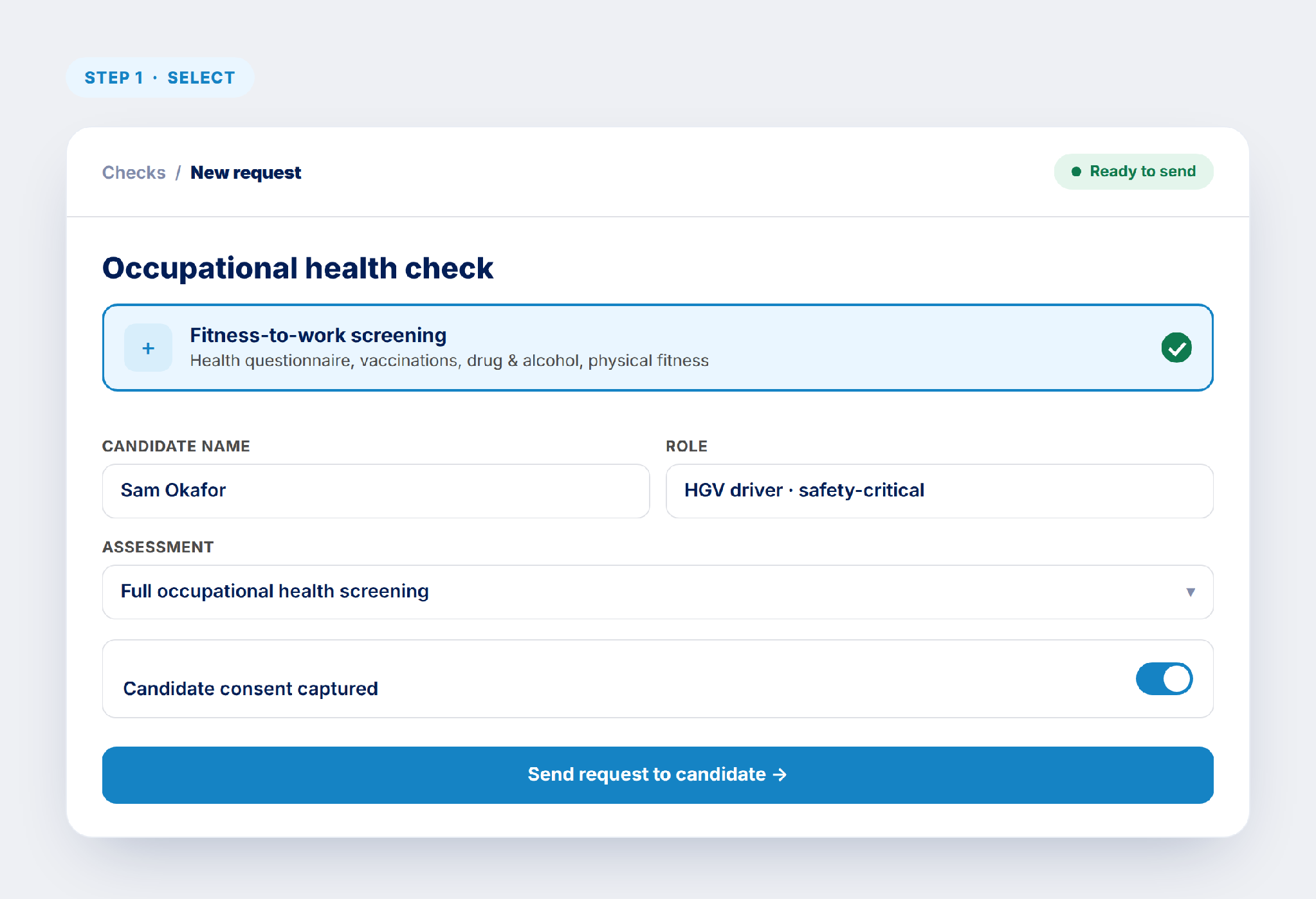
You select the occupational health check, capture the candidate’s consent, and set the assessment to the role.
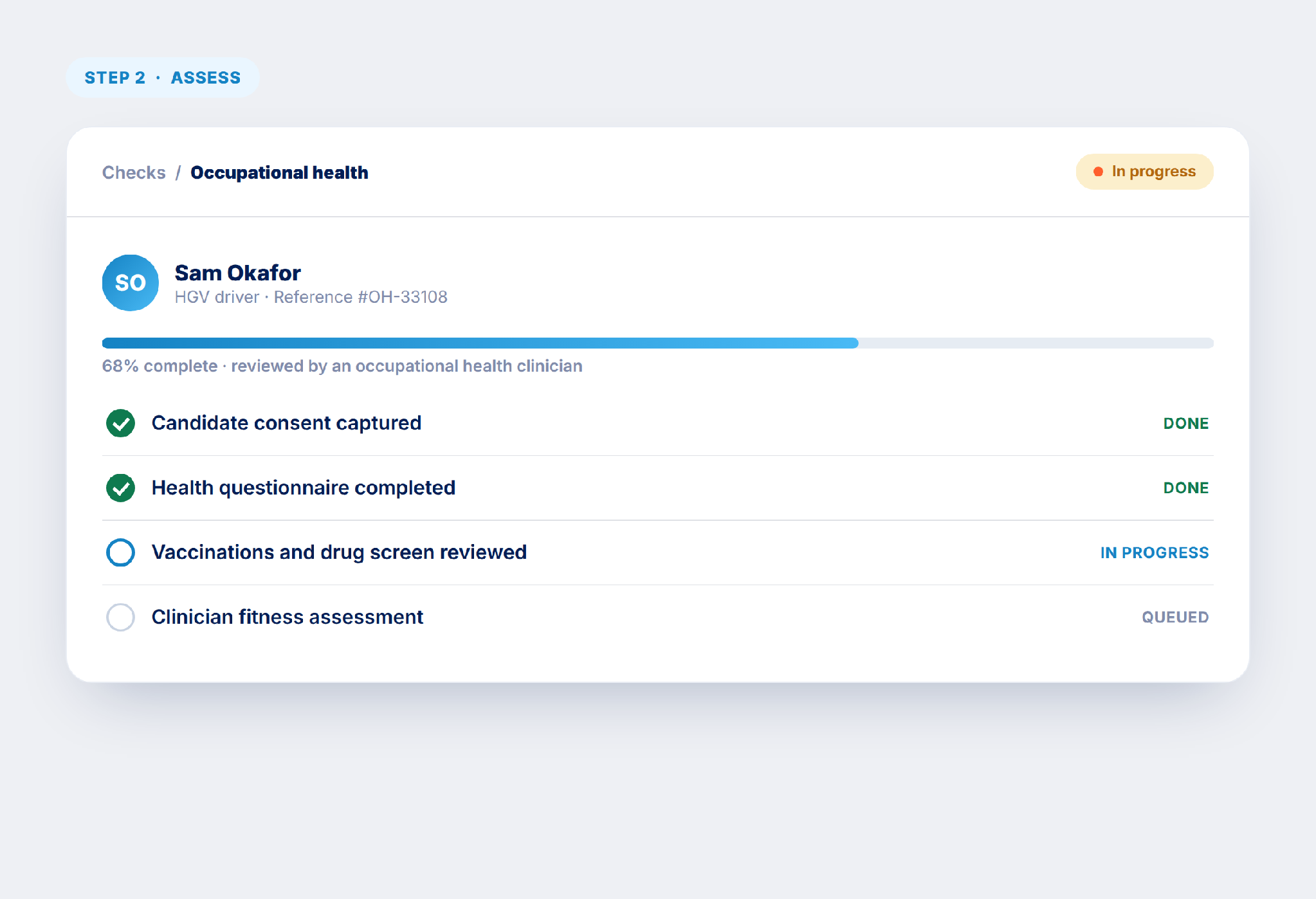
Veremark works with global occupational health providers to complete the questionnaire, screening and clinician review.
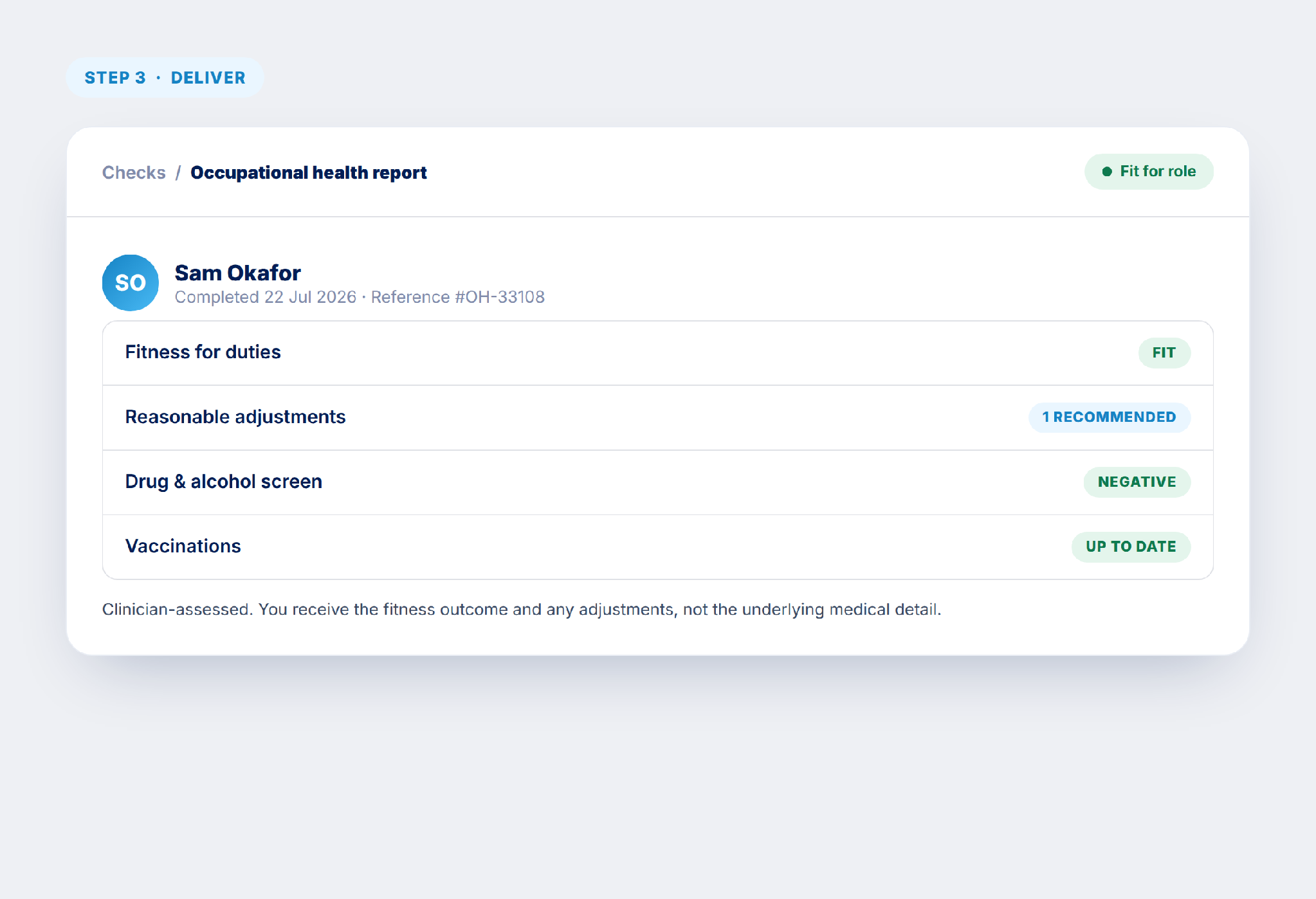
You get a shareable report with the fitness outcome and any adjustments, without the confidential medical detail.
It's GDPR and PDPA compliant, pay-as-you-go with no lock-in, works across the markets you hire in, and comes with 24/7 support. Run it as a single check or build it into a wider screening package.
The bottom line
An occupational health check confirms a candidate can safely do the job they've been offered, and flags the support they might need to do it well. Used on the right roles, at the right point in the process, and handled by clinicians, it protects your people and your duty of care without overreaching. Veremark runs it compliantly, globally, and alongside every other check you make.
.png)
Read More





FAQs

This depends on the industry and type of role you are recruiting for. To determine whether you need reference checks, identity checks, bankruptcy checks, civil background checks, credit checks for employment or any of the other background checks we offer, chat to our team of dedicated account managers.
Many industries have compliance-related employment check requirements. And even if your industry doesn’t, remember that your staff have access to assets and data that must be protected. When you employ a new staff member you need to be certain that they have the best interests of your business at heart. Carrying out comprehensive background checking helps mitigate risk and ensures a safer hiring decision.
Again, this depends on the type of checks you need. Simple identity checks can be carried out in as little as a few hours but a worldwide criminal background check for instance might take several weeks. A simple pre-employment check package takes around a week. Our account managers are specialists and can provide detailed information into which checks you need and how long they will take.
All Veremark checks are carried out online and digitally. This eliminates the need to collect, store and manage paper documents and information making the process faster, more efficient and ensures complete safety of candidate data and documents.
In a competitive marketplace, making the right hiring decisions is key to the success of your company. Employment background checks enables you to understand more about your candidates before making crucial decisions which can have either beneficial or catastrophic effects on your business.
Background checks not only provide useful insights into a candidate’s work history, skills and education, but they can also offer richer detail into someone’s personality and character traits. This gives you a huge advantage when considering who to hire. Background checking also ensures that candidates are legally allowed to carry out certain roles, failed criminal and credit checks could prevent them from working with vulnerable people or in a financial function.
Trusted by the world's best workplaces




APPROVED BY INDUSTRY EXPERTS
.png)
.png)


and Loved by reviewers


Transform your hiring process
Request a discovery session with one of our background screening experts today.