
Nationally Coordinated Criminal History Checks (NCCHC) - By Employrite
Fast NCCHC made easy through our accredited subsidiary Employrite


Fast National Coordinated Criminal History Checks (NCCHC) through Employrite
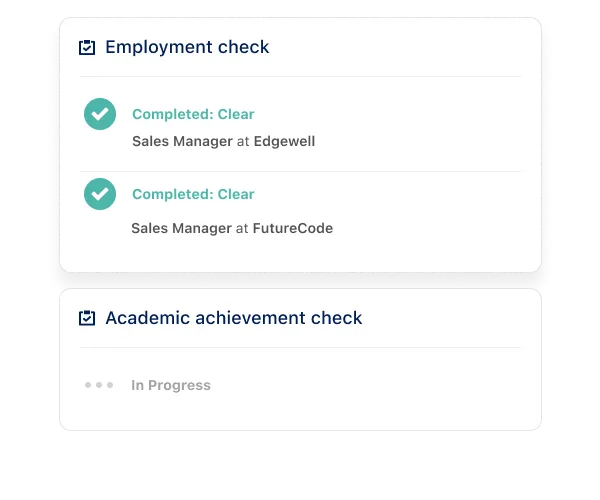
Our subsidiary Employrite is accredited to deliver Nationally Coordinated Criminal History Checks through the official National Police Checking Service, so you can verify an Australian hire’s criminal history in one place, with live status updates from request to result.
A criminal history check is one of the first questions an Australian employer needs answered before a new hire starts. Most general roles call for a Nationally Coordinated Criminal History Check (NCCHC), the national criminal history check coordinated with state and territory police. People still call it a national police check or a police clearance. It’s the same check.
It looks at an applicant’s disclosable criminal history across every state and territory, not only the one they live in. The result covers court outcomes, convictions, findings of guilt and pending charges, filtered by spent convictions law and the relevant information release policies. You get a single national result instead of chasing records jurisdiction by jurisdiction.
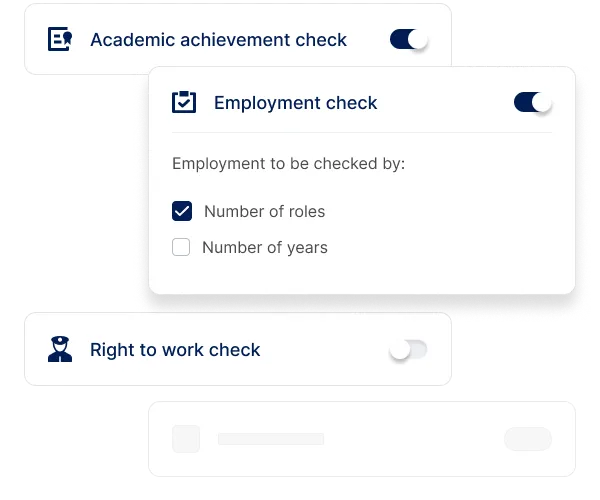
Employrite handles the request, the candidate’s consent and identity step, and the result, and folds the police check in with any other checks you run on the same hire. There are no portals to keep on top of and no documents to collect over email.
To learn more, visit employrite.com
An NCCHC check gives you:
- A national result, drawn from every Australian state and territory
- A clear finding for most candidates upon submission
- Disclosable court outcomes, convictions and pending charges, filtered to what’s legally releasable
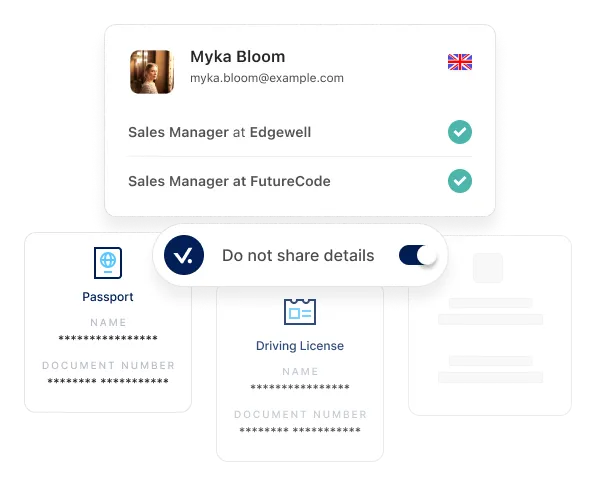
- Informed consent and identity captured and recorded against every check


Trusted by the world's best workplaces


PROVEN
.png)
.png)


and Loved by reviewers


Results in days
Most checks return within 2-3 business days, with the rest tracked through to completion.
One consent step
Candidates give informed consent and verify their ID online, on any device.
No lock-in
Pay per check. No minimum volumes and no long contracts.
Compliant by design
Every check goes through the official National Police Checking Service, with consent captured and recorded.
A real support team
People who know Australian screening, not a ticket queue.
Built into your hiring
Run the police check alongside right to work, identity and reference checks in a single request.
What the check covers, and what it doesn’t
A police check shows an applicant’s disclosable criminal history. Disclosable is the operative word. Not every record is released, and what comes back depends on spent convictions law and the purpose the check is run for.
What it discloses
- Convictions and findings of guilt recorded by a court
- Court outcomes across all states and territories, including local and interstate matters
- Good behaviour bonds and orders that carry conditions
- Charges that are pending or waiting to be heard
- A single national result, returned as No Disclosable Court Outcomes or Disclosable Court Outcomes
What it usually won’t show
- Spent convictions, once enough time has passed under the relevant spent convictions scheme
- Many juvenile or youth matters, depending on the jurisdiction
- Charges that were withdrawn or dismissed without a conviction recorded
- Dismissals without conditions, such as a Section 10 with no bond attached
- Police cautions, which aren’t court convictions
What’s released is shaped by each state and territory’s legislation and by the purpose recorded on the application. Some occupations and licensing categories have their own release rules, so a check run for one of those purposes can show more.
How it works
Related checks


Learn more

.jpg)


5 Steps to spot fake candidates before you hire them


Rescreening in 2026: Who, How Often, and What Auditors Want to See

FAQs

NCCHC is short for Nationally Coordinated Criminal History Check, the standard criminal history check for Australian employment. It’s coordinated nationally with state and territory police and run through the National Police Checking Service. You’ll also hear it called a national police check or a police clearance.
An applicant’s disclosable criminal history across all states and territories: court outcomes, convictions, findings of guilt and pending charges. Results come back as either No Disclosable Court Outcomes or Disclosable Court Outcomes with detail.
Spent convictions where enough time has passed, many juvenile matters, charges that were withdrawn or dismissed without a conviction, dismissals without conditions, and police cautions. What’s released depends on the relevant spent convictions legislation and the purpose the check is run for.
Most checks return within 2-3 business days. Some are referred to a police agency for a manual review and take longer. You see live status updates throughout.
Yes. The candidate must give informed consent for the specific purpose of the check before it’s submitted. Employrite captures and records that consent as part of the candidate’s online steps.
Yes. The candidate verifies their identity online by uploading approved ID documents, and Employrite guides them through it.
Yes. Each check is run for a specific purpose. The purpose, alongside state and territory legislation, shapes what police information is released. Some occupations and licensing categories have their own release rules. If the purpose of the check changes a new check must be run.
A disclosable outcome isn’t an automatic bar. Australian guidance is that a criminal record should only count where it’s relevant to the inherent requirements of the role. Assess the outcome against the job, give the candidate a chance to respond, and take your own legal or HR advice.
Yes. In addition, where a check returns a disclosable outcome the candidate is given the result first to confirm details and allow for confirmation or raise a dispute. Candidates can also request a copy in any case.
A check reflects a person’s history on the date it’s issued, and there’s no legislated expiry. Most employers set their own recheck cycle based on the role, and run higher-risk roles more often.
Both are national police checks, and both can be used for employment screening. An NCCHC check is run through the National Police Checking Service. An Australian Federal Police (AFP) National Police Certificate is issued directly by the AFP. You must use the AFP check for Commonwealth or ACT purposes. For most other roles either is suitable, and which to use comes down to your organisation’s requirements. In both cases the purpose you state on the application can affect what’s released. Refer to https://www.afp.gov.au/our-services/national-police-checks for more information.
Yes. Run it on its own or alongside right to work, identity, employment history and reference checks in a single request.
No. The Nationally Coordinated Criminal History Check is the general employment check. Roles working with children or in aged care need their own sector-specific check as well.
Build trust into every Australian hire
Talk to a Employrite screening specialist about running ACIC police checks for your team.