
The UK criminal record check for England and Wales. Run online at Basic, Standard or Enhanced level, with the identity step handled digitally.


DBS checks without the time-consuming document collection
The three levels of DBS check
A DBS check is how UK employers confirm whether an employee has a criminal record that’s relevant to the role they’re hiring for. A DBS certificate reflects a person’s record on the day it’s issued. There’s no legislated expiry, so most employers set their own recheck cycle by role.
Basic DBS checks can be requested for anyone. Standard and Enhanced DBS checks are restricted. You have to be able to point to the legislation that makes the role eligible, and the request records which exemption applies. Our team helps you establish eligibility before a check goes in, so requests don’t get rejected after the candidate has already filled the form.
Employers commonly run DBS checks for:
- Pre-employment screening where the role is eligible for a Standard or Enhanced certificate
- Regulated roles in finance, legal, accountancy and security
- Roles in regulated activity with children or vulnerable adults, alongside a barred list check
- Contractor and agency onboarding into eligible roles
- Periodic rechecks where a role’s risk profile calls for it
We run DBS checks through the Disclosure and Barring Service, with candidate consent and identity captured online, so nobody on your team handles a single ID card or utility bill request.
A DBS check typically discloses: unspent convictions and conditional cautions, spent convictions, cautions, reprimands and warnings, at Standard and Enhanced level, Non-conviction police information a chief officer judges relevant (Enhanced level only), and whether the person appears on the children’s or adults’ barred lists (where the Enhanced check includes a barred list request).
Pricing: You will receive a quick and straightforward service as we have a direct integration and are an umbrella body of the Disclosure and Barring Service.
- Basic is £20.00 + admin fee £24.44
- Standard is £20.00 + admin fee £24.44
- Enhanced is £41.00 + admin fee £24.44


Trusted by the world's best workplaces




PROVEN
.png)
.png)


and Loved by reviewers


Digital identity, not document scans
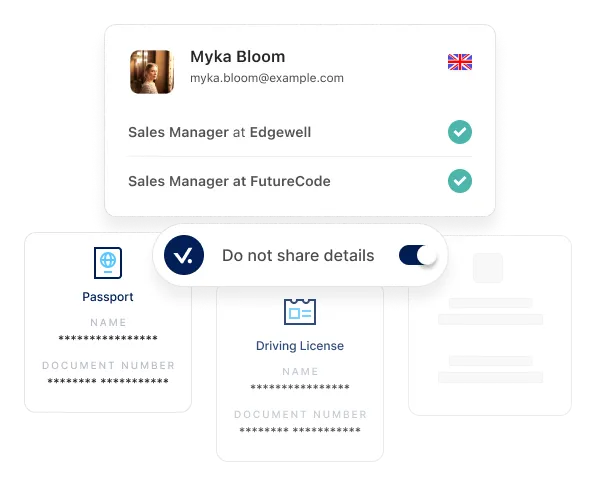
Candidates verify identity online, so ID documents never need to reach your inbox or consume your time.
A guided fallback
Where digital verification isn’t used, the DBS document routes are prompted step by step.
All three levels
Basic, Standard and Enhanced, with help establishing eligibility first.
Results delivered where you work
Progress and outcome delivered into your ATS rather than a separate login.
Consent on the record
Written consent captured as part of the candidate’s steps, recorded against every check.
Run everything else in one place
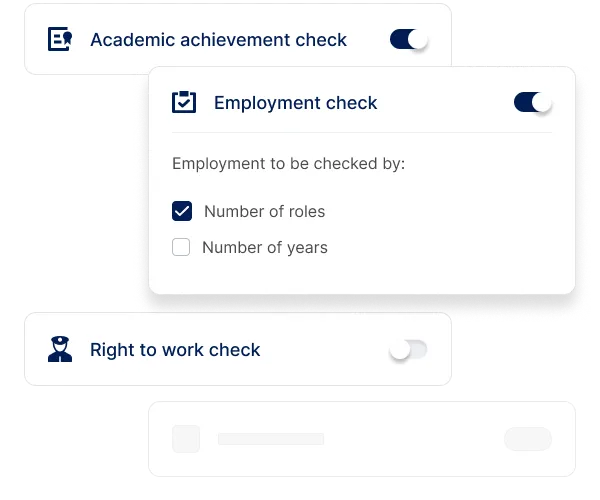
Order the DBS check alongside right-to-work, employment history and reference checks in one single request.
Most of the friction in DBS checking isn’t the check itself. It’s the identity step. The standard process asks a member of your team to inspect three original documents in person, or asks the candidate to email copies of their passport and utility bills, which puts sensitive personal data in an inbox and slows the hiring process down.
We handle that step digitally. The candidate completes a short mobile form, gives consent, and verifies their identity online. If digital identity verification isn’t available or doesn’t succeed, the system walks your team through the DBS document routes instead. Either way the check moves without documents changing hands over email.
A DBS check through Veremark gives you:
- The right certificate level for the role, at Basic, Standard or Enhanced
- Identity verified digitally, with a guided document fallback when it’s needed
- Consent captured and recorded against every check
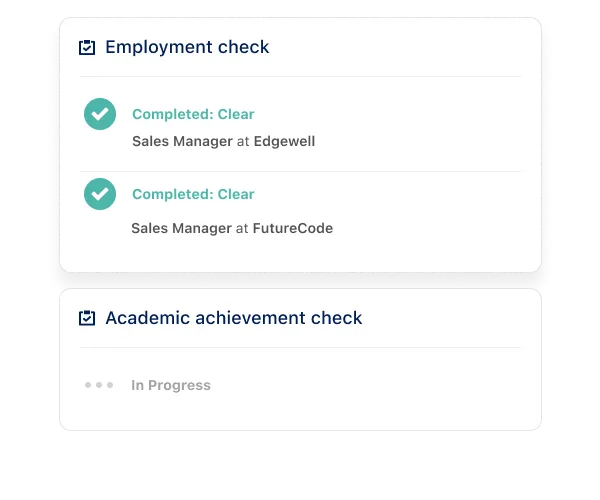
- Live status from submission to certificate, delivered back into your hiring system
How it works


.jpg)

FAQs

A criminal record check issued by the Disclosure and Barring Service for roles in England and Wales. It’s still often called a CRB check, after the body the DBS replaced in 2012.
Basic shows unspent convictions and can be requested for any role. Standard shows spent and unspent convictions, cautions, reprimands and warnings, and is limited to roles listed in the Rehabilitation of Offenders Act exceptions order. Enhanced adds any police information a chief officer considers relevant, and can include a barred list check for roles in regulated activity.
It depends on the role, not on the employer or the candidate. Standard and Enhanced require the role to be covered by specific legislation. Veremark’s team helps you confirm eligibility before the check is submitted.
A Basic check typically returns in 1 to 14 days. Standard and Enhanced typically take 3 to 12 days. Checks that need police force input take longer, and that part sits outside any provider’s control.
Not where digital identity verification is used. The candidate verifies identity online instead. Where digital verification isn’t used or doesn’t succeed, the DBS document routes apply and your team is prompted through them.
No. Scotland is covered by Disclosure Scotland and Northern Ireland by AccessNI. If you’re hiring across the UK, you’ll need the right check for each jurisdiction.
There’s no legislated expiry. A certificate reflects the record on the date it’s issued. Most employers set a recheck cycle based on the role.
Yes. Veremark integrates with major applicant tracking and HR systems so checks can be ordered and returned without leaving your hiring workflow. Setup requirements vary by system.
Yes. The DBS issues the certificate to the candidate. For Standard and Enhanced checks the employer sees the result, and it’s good practice to discuss anything disclosed with the candidate before making a decision.
You can run the DBS check, but it only reaches UK records. For time spent overseas, add an overseas criminal record check for the relevant country.
Start with any check. Connect the rest.
Most clients start with one check and add the rest when they’re ready. Nothing has to be bought together to work together.