
When an employee speaks up - The first 90 days of an underpayment issue


A single payroll query from one employee. That's how some of Australia's largest remediation projects have started.
The question isn't whether an underpayment issue will surface. It's what happens in the weeks that follow. The decisions made in the first 90 days, who owns the response, how complaints are recorded, when to escalate, and whether to notify the regulator, determine whether the organisation resolves a contained problem or finds itself managing a crisis.
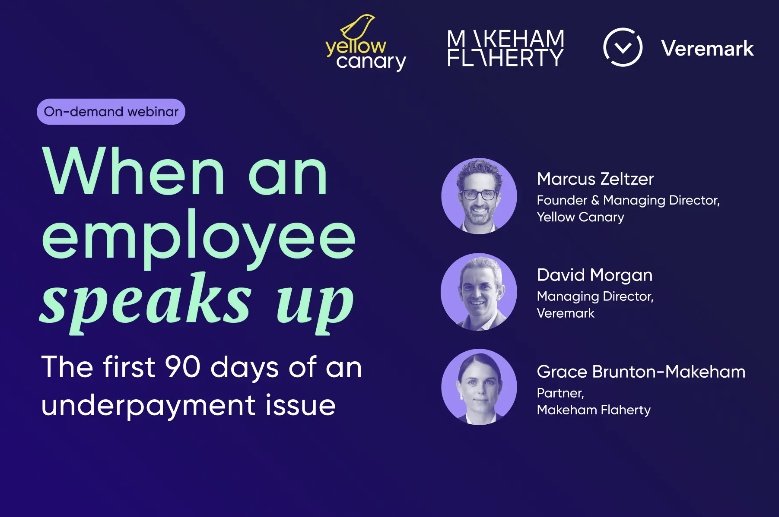
In this session, employment lawyer Grace Brunton-Makeham, whistleblowing and corporate integrity specialist David Morgan, and payroll compliance expert Marcus Zeltzer work through the judgment calls, common mistakes, and legal dynamics that define those critical early weeks.
What you'll learn
How underpayment issues surfaceFrom individual payroll queries and union activity to Fair Work Ombudsman complaints and third-party speak-up channels. Why issues raised through different pathways carry different legal implications.
The mistake that compounds everythingWhy treating complaints in isolation, without a central record, creates a gap between what the board can see and what the regulator will find. How ad hoc handling of individual complaints can build a pattern that looks reckless under the new penalty framework.
Where whistleblowing law now intersects with wage theftSince 1 January 2025, intentional underpayment is a criminal offence. That change creates a new connection to whistleblower protections under the Corporations Act, including confidentiality requirements and prohibitions on adverse action. What "improper state of affairs" means in practice, and when a payroll complaint becomes a protected disclosure.
The penalty framework under Closing the LoopholesThe three tiers of contravention (general, serious, criminal), what "reckless" means in practice, and why the $4.95 million per-contravention penalty for serious contraventions is the one most organisations should be focused on.
Judgment calls in the first 90 daysIdentifying a decision-maker. Determining whether an issue is isolated or systemic. Assessing what else you don't know. Timing regulator notification: why going too early without a plan can be as damaging as going too late.
Stakeholder sequencingManaging the order and level of information shared with the Fair Work Ombudsman, unions, employees, media, state regulators, and (for listed companies) the ASX. Why different audiences need different messages, and how to maintain employee trust without overstating the problem.
What you'll learn
Australia's award system covers 155 modern awards and thousands of enterprise agreements. It is widely regarded as the second most complex payroll environment in the world. Most employers are trying to pay people correctly, but the Closing the Loopholes legislation has changed the consequences of getting it wrong.
The bar for "serious contravention" has been lowered from intentional to reckless. That means an organisation that fails to investigate known issues, or that lacks a central record of payroll complaints, may face penalties of up to $4.95 million per contravention, even without any intent to underpay.
The first 90 days after an issue surfaces are when the organisation's response is defined. This session gives you a framework for getting them right.
About the speakers
David Morgan
Managing Director, Whistleblower Technologies, Veremark
David leads Veremark's whistleblowing and speak-up technology practice. With a background in corporate investigations across several major accounting firms, he advises organisations on building reporting frameworks that surface problems early, before they reach regulators or the media. His focus is on the intersection of culture, governance, and independent reporting channels.
Grace Brunton-Makeham
Partner, Makeham Flaherty
Grace is a partner at Makeham Flaherty, a Melbourne-based employment law firm specialising in the contentious side of employment law. She advises on payroll disputes, wage remediation projects, proactive audits, and superannuation and leave compliance. Her practice sits at the intersection of employment law and payroll risk, helping organisations respond to underpayment issues and manage regulatory exposure.
Marcus Zeltzer
Founder, Yellow Canary
Marcus is the founder of Yellow Canary, a payroll compliance platform that has supported over 100 remediation activities across Australian employers. He brings practical experience in identifying root causes of underpayment, from system misconfiguration to workforce planning practices, and moderates the session.


FAQs

This depends on the industry and type of role you are recruiting for. To determine whether you need reference checks, identity checks, bankruptcy checks, civil background checks, credit checks for employment or any of the other background checks we offer, chat to our team of dedicated account managers.
Many industries have compliance-related employment check requirements. And even if your industry doesn’t, remember that your staff have access to assets and data that must be protected. When you employ a new staff member you need to be certain that they have the best interests of your business at heart. Carrying out comprehensive background checking helps mitigate risk and ensures a safer hiring decision.
Again, this depends on the type of checks you need. Simple identity checks can be carried out in as little as a few hours but a worldwide criminal background check for instance might take several weeks. A simple pre-employment check package takes around a week. Our account managers are specialists and can provide detailed information into which checks you need and how long they will take.
All Veremark checks are carried out online and digitally. This eliminates the need to collect, store and manage paper documents and information making the process faster, more efficient and ensures complete safety of candidate data and documents.
In a competitive marketplace, making the right hiring decisions is key to the success of your company. Employment background checks enables you to understand more about your candidates before making crucial decisions which can have either beneficial or catastrophic effects on your business.
Background checks not only provide useful insights into a candidate’s work history, skills and education, but they can also offer richer detail into someone’s personality and character traits. This gives you a huge advantage when considering who to hire. Background checking also ensures that candidates are legally allowed to carry out certain roles, failed criminal and credit checks could prevent them from working with vulnerable people or in a financial function.
Trusted by the world's best workplaces




APPROVED BY INDUSTRY EXPERTS
.png)
.png)



and Loved by reviewers


Transform your hiring process
Request a discovery session with one of our background screening experts today.