
What the 2025 FCA fines reveal about your hiring controls


2025 was a heavy year for FCA enforcement, and the pattern running through the largest cases is worth the attention of every HR and compliance team in financial services. The fines were issued for financial crime, AML, and due diligence failures. Underneath each one sits a control that depended on people: who was hired, what was verified about them, and whether anyone was watching after they started.
The cases
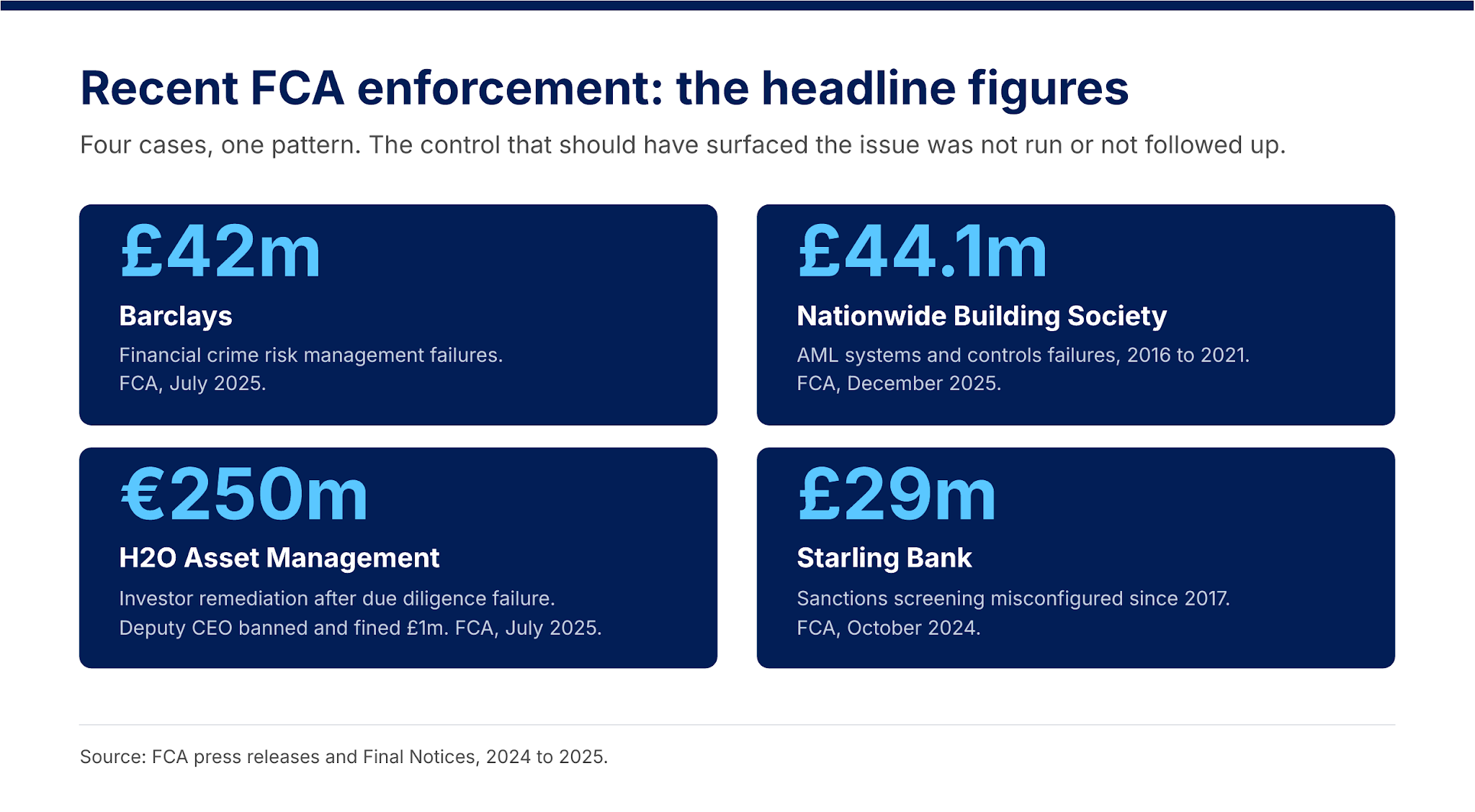
Barclays was fined £42m in July 2025 for failing to properly assess and manage financial crime risks in client relationships, including links to known money laundering concerns. The bank did not gather sufficient information at onboarding or conduct adequate ongoing monitoring, despite clear warning signs.
Nationwide Building Society was fined £44.1m in December 2025 for significant anti-money laundering failings between 2016 and 2021. Weaknesses in customer risk assessment, transaction monitoring, and governance oversight meant high-risk activity went undetected. The regulator emphasised that senior management failed to ensure effective oversight of financial crime controls.
H2O Asset Management agreed to pay €250m to investors after failing to carry out adequate due diligence on illiquid investments. When investors couldn't redeem, the firm fabricated meeting minutes and provided false statements to the regulator. Deputy CEO Jean-Noel Alba was permanently banned and fined £1m for lack of integrity.
Starling Bank, fined £29m in late 2024, set the tone going into 2025. Its automated sanctions screening had been misconfigured since 2017, screening customers against only 39 of more than 3,000 designated persons on the UK Consolidated List.

The common thread
Read the four cases together and the same pattern surfaces. The information that would have prevented the consequence was either available before the issue arose, or could have been caught by ongoing monitoring. In none of these cases was the problem invisible. The problem was that the control which should have surfaced it had not been run, had not been maintained, or had not been followed up.
Bad outcomes in financial services rarely involve invisible facts. They involve facts that weren't checked, controls that weren't tested, and warning signs that weren't escalated.
That pattern has a direct read-across to hiring and screening. A regulated reference that comes back clean because a previous employer declined to make a formal finding. An adverse financial history check run in one jurisdiction when the candidate has lived in three. A directorship that sits visible on a public register but is never queried. An onboarding check that is the only verification a person will ever receive, however long they stay and however their role changes.
What this means for screening controls
Three implications follow for any financial services firm reviewing its screening programme.

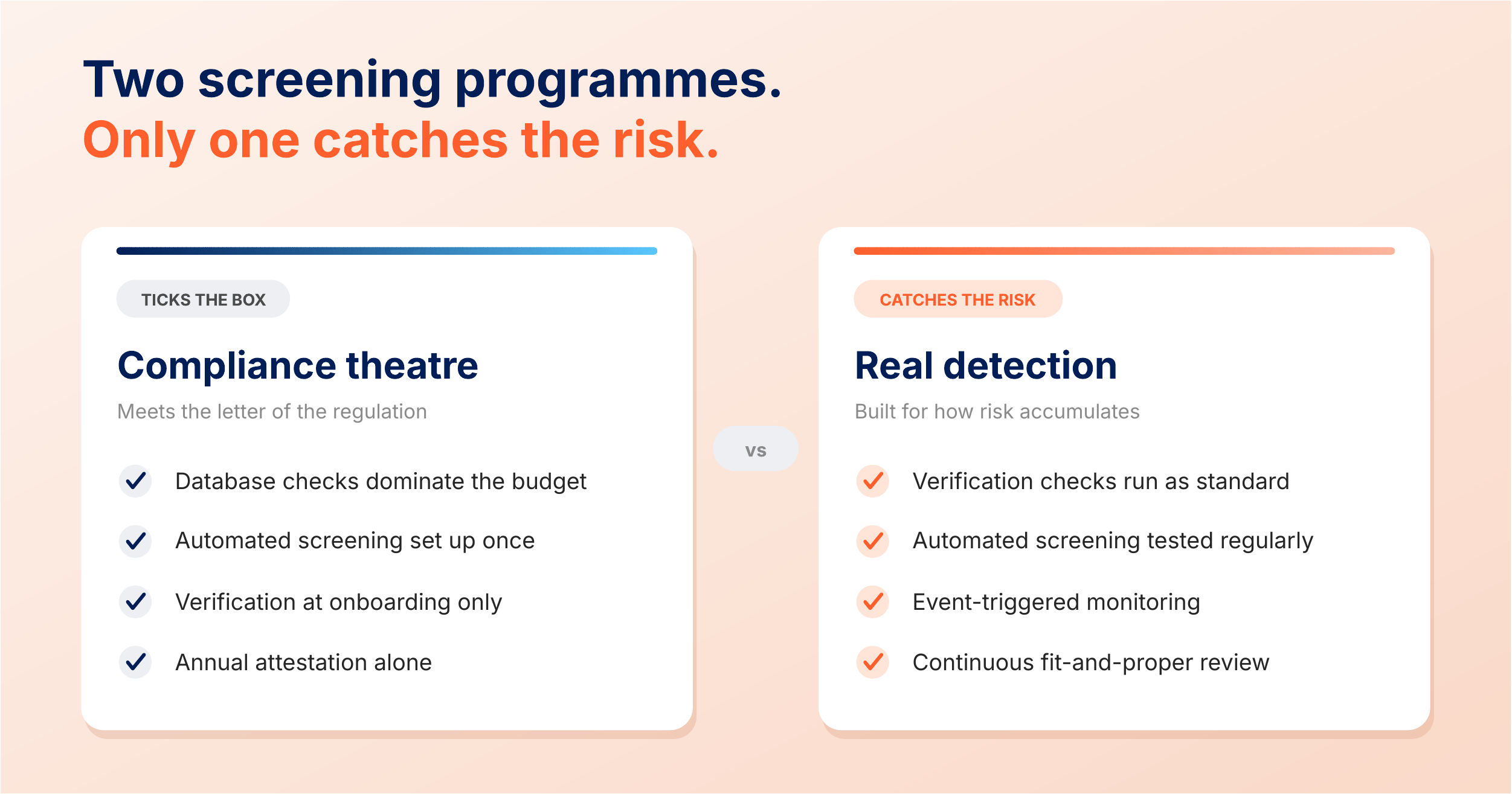
- Run the checks that flag, not just the checks that look thorough. Database checks dominate financial services screening volume but flag under 1% of the time. Verification checks (employment, education, CV gap analysis) flag far more often and sit largely outside standard packages.
- Test and maintain automated screening. The Starling case is a reminder that a screening control which isn't tested can fail silently for years. Ask a provider for discrepancy data by check type, and confirm that automated screening is calibrated against current lists.
- Treat fit and proper as continuous. Most of the conduct in these cases developed or surfaced after onboarding. Calendar-based annual attestation misses events that happen between cycles. Event-triggered monitoring closes that gap.
The cost of the gap
The combined headline figures from these four cases run well past £150m in fines alone, before customer remediation, skilled-persons review costs, and the business stalled while controls were rebuilt. None of it started as a hiring problem. All of it traces back to controls that depended on people and the systems built around them. The 2026 Veremark Screening Benchmark Report sets out where those controls most often fall short, and what a better-configured programme looks like.
Go deeper
The full report, The true cost of a bad hire in financial services, breaks down the six-component cost framework, five real enforcement cases, and a screening stack built for the financial services hiring lifecycle.

.jpg)


FAQs

This depends on the industry and type of role you are recruiting for. To determine whether you need reference checks, identity checks, bankruptcy checks, civil background checks, credit checks for employment or any of the other background checks we offer, chat to our team of dedicated account managers.
Many industries have compliance-related employment check requirements. And even if your industry doesn’t, remember that your staff have access to assets and data that must be protected. When you employ a new staff member you need to be certain that they have the best interests of your business at heart. Carrying out comprehensive background checking helps mitigate risk and ensures a safer hiring decision.
Again, this depends on the type of checks you need. Simple identity checks can be carried out in as little as a few hours but a worldwide criminal background check for instance might take several weeks. A simple pre-employment check package takes around a week. Our account managers are specialists and can provide detailed information into which checks you need and how long they will take.
All Veremark checks are carried out online and digitally. This eliminates the need to collect, store and manage paper documents and information making the process faster, more efficient and ensures complete safety of candidate data and documents.
In a competitive marketplace, making the right hiring decisions is key to the success of your company. Employment background checks enables you to understand more about your candidates before making crucial decisions which can have either beneficial or catastrophic effects on your business.
Background checks not only provide useful insights into a candidate’s work history, skills and education, but they can also offer richer detail into someone’s personality and character traits. This gives you a huge advantage when considering who to hire. Background checking also ensures that candidates are legally allowed to carry out certain roles, failed criminal and credit checks could prevent them from working with vulnerable people or in a financial function.
Trusted by the world's best workplaces




APPROVED BY INDUSTRY EXPERTS
.png)
.png)



and Loved by reviewers


Transform your hiring process
Request a discovery session with one of our background screening experts today.