
The Bystander Problem: How to Prevent Sexual Harassment Hiding in Plain Sight


A lingering hand on a junior colleague’s waist at the work Christmas party, a sexual innuendo on a video call that silences the conversation or unwanted "banter" in a team group chat - these are the moments where workplace trust begins to ebb away.
They’re not always headline-grabbing scandals; often they are "glitches" in professional standards that most people observe, feel uncomfortable about, and (all too often) choose to ignore. Yet in almost every documented case of workplace sexual harassment, colleagues knew something was wrong. They heard the comments, saw the unwanted physical contact, noticed colleagues avoiding certain managers or leaving team events early. Research shows that in most cases, multiple people usually witness these patterns long a formal report is ever filed.
The Silence in the Room Is Now Your Liability
For organisations in the UK and Australia, that silence is no longer just an HR headache - it’s a compliance problem. Under "positive duty" frameworks, neither jurisdiction accepts "no one reported it" as evidence of a safe culture.
- In the UK: From October 2026, employers must demonstrate they took "all reasonable steps" to prevent sexual harassment.
- In Australia: The AHRC expects organisations to prove proactive prevention through evidence of risk identification and early intervention.
Where Harassment Clusters
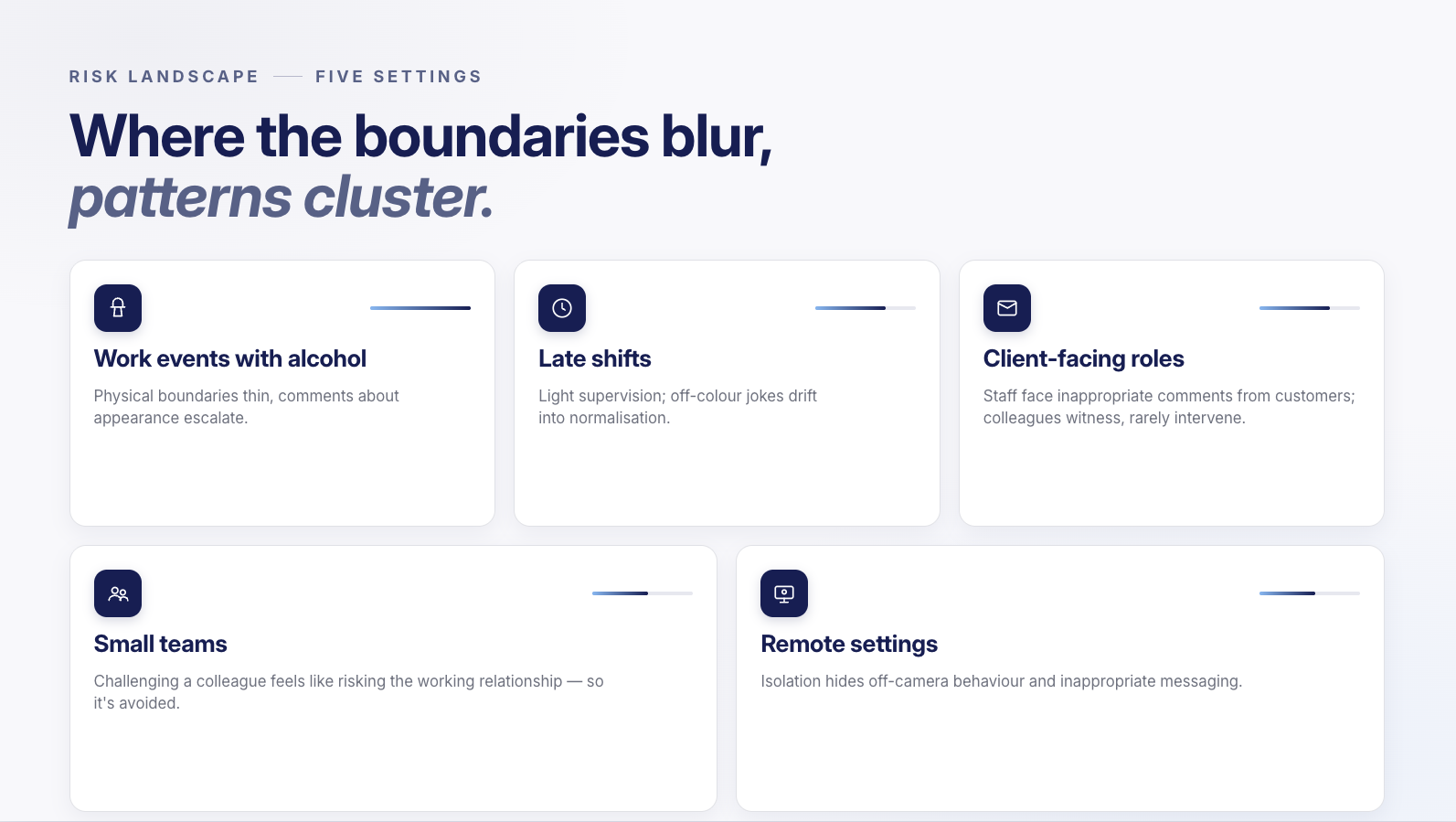
While sexual harassment can occur within any organisation, it tends to cluster in predictable, high-risk settings, where boundaries are blurred:
- Work events with alcohol: Where physical boundaries thin and comments about appearance escalate.
- Late shifts: Where supervision is light and sexual jokes can become normalised.
- Client-facing roles: Where staff may face sexual comments from customers while colleagues witness but don't intervene.
- Small teams: Where challenging a colleague's behaviour is avoided to prevent disrupting daily working relationships.
- Remote settings: Where isolation hides inappropriate video call behaviour or messaging.
The Safety Valve: Removing the Barriers to Speaking Up
Bystanders typically stay silent not because they don't care, but because they fear the consequences of reporting. They don’t want to be labelled a "troublemaker," trigger a massive disciplinary process, or be the reason a colleague loses their job. When the only option is filing an official grievance, most bystanders choose to say nothing.
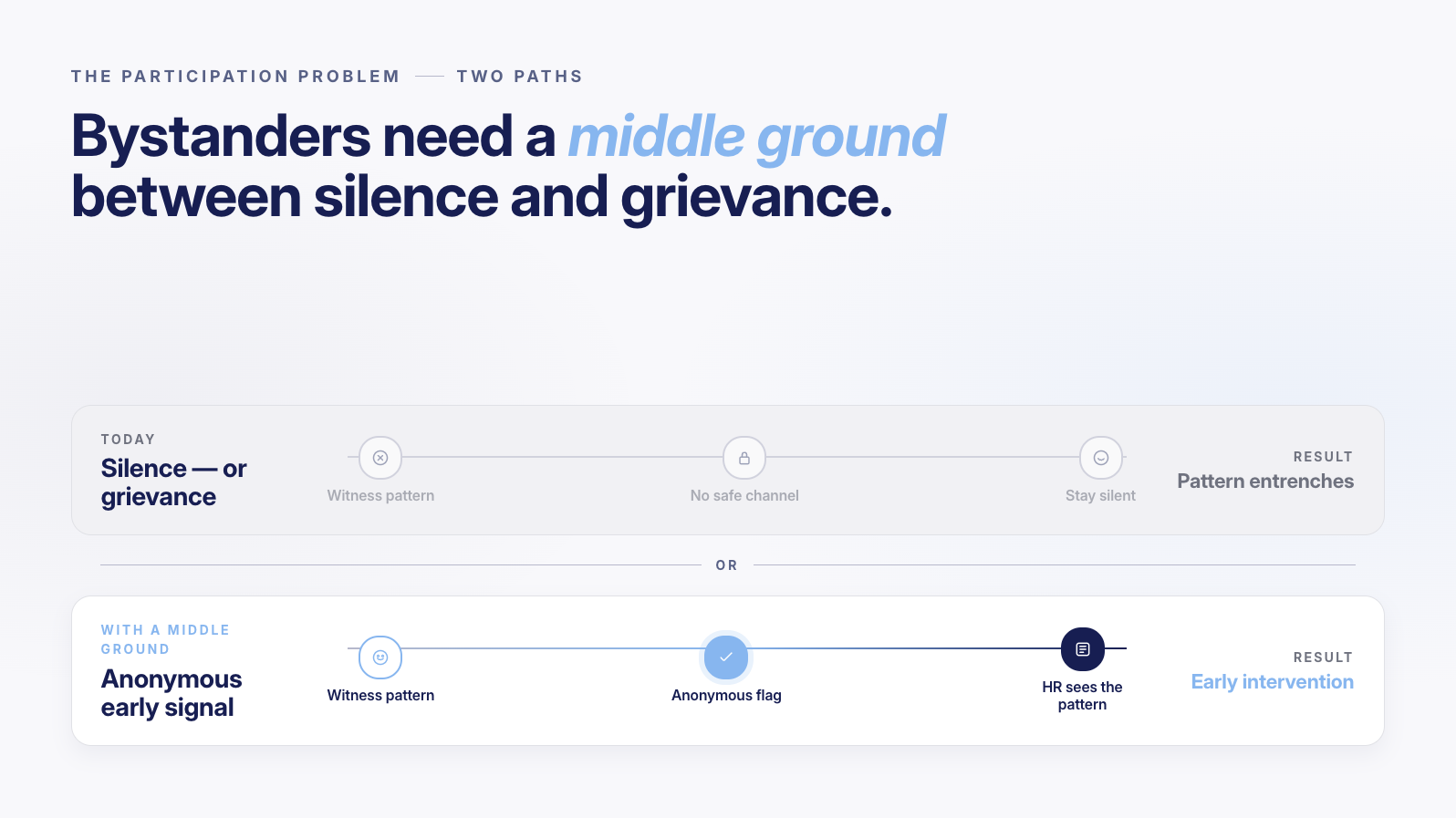
Workers who witness sexual harassment need a middle ground, somewhere to go that isn't a formal complaint. This is where anonymous whistleblowing infrastructure solves the “participation problem”.
"A culture of silence isn't proof of a safe workplace; it's evidence that the barriers to speaking up are currently insurmountable. Equipping your team with the right tools transforms quiet observations into a strategic early-warning network."
Transforming Observations into Action
By providing anonymous two-way channels, bystanders can flag patterns of sexual comments or uncomfortable dynamics without identifying themselves. This allows HR to address behaviour before it escalates or becomes an entrenched pattern.
Veremark’s workplace trust platform makes this practical by creating the audit trail required to demonstrate "reasonable steps" to regulators. It transforms bystander awareness into organisational visibility, turning every team member into part of your prevention architecture.
Building Capability Before Culture Sets
The most effective time to establish expectations around sexual harassment is during onboarding, before new employees absorb existing workplace norms. When bystander capability is integrated from day one - this is how we treat each other, this is what we do when we witness sexual comments or unwanted contact, these are the channels available - prevention becomes the culture people join rather than a retrofit they resist.
True culture change happens when a workforce trusts that acting will produce a meaningful response rather than a social cost. Organisations building this culture outperform those relying on victims to report and HR to investigate.
Veremark's workplace trust platform makes bystander participation practical and compliant. The system accepts third-party observations of sexual harassment, creates early intervention opportunities and provides the evidence of proactive prevention UK and Australian regulators expect.
Talk to us about activating your whole workforce around prevention and meeting the new standards of proactive care.
{{whistleblowing-cta="/components"}}
Read More



.png)

FAQs

This depends on the industry and type of role you are recruiting for. To determine whether you need reference checks, identity checks, bankruptcy checks, civil background checks, credit checks for employment or any of the other background checks we offer, chat to our team of dedicated account managers.
Many industries have compliance-related employment check requirements. And even if your industry doesn’t, remember that your staff have access to assets and data that must be protected. When you employ a new staff member you need to be certain that they have the best interests of your business at heart. Carrying out comprehensive background checking helps mitigate risk and ensures a safer hiring decision.
Again, this depends on the type of checks you need. Simple identity checks can be carried out in as little as a few hours but a worldwide criminal background check for instance might take several weeks. A simple pre-employment check package takes around a week. Our account managers are specialists and can provide detailed information into which checks you need and how long they will take.
All Veremark checks are carried out online and digitally. This eliminates the need to collect, store and manage paper documents and information making the process faster, more efficient and ensures complete safety of candidate data and documents.
In a competitive marketplace, making the right hiring decisions is key to the success of your company. Employment background checks enables you to understand more about your candidates before making crucial decisions which can have either beneficial or catastrophic effects on your business.
Background checks not only provide useful insights into a candidate’s work history, skills and education, but they can also offer richer detail into someone’s personality and character traits. This gives you a huge advantage when considering who to hire. Background checking also ensures that candidates are legally allowed to carry out certain roles, failed criminal and credit checks could prevent them from working with vulnerable people or in a financial function.
Trusted by the world's best workplaces


APPROVED BY INDUSTRY EXPERTS
.png)
.png)


and Loved by reviewers


Transform your hiring process
Request a discovery session with one of our background screening experts today.